

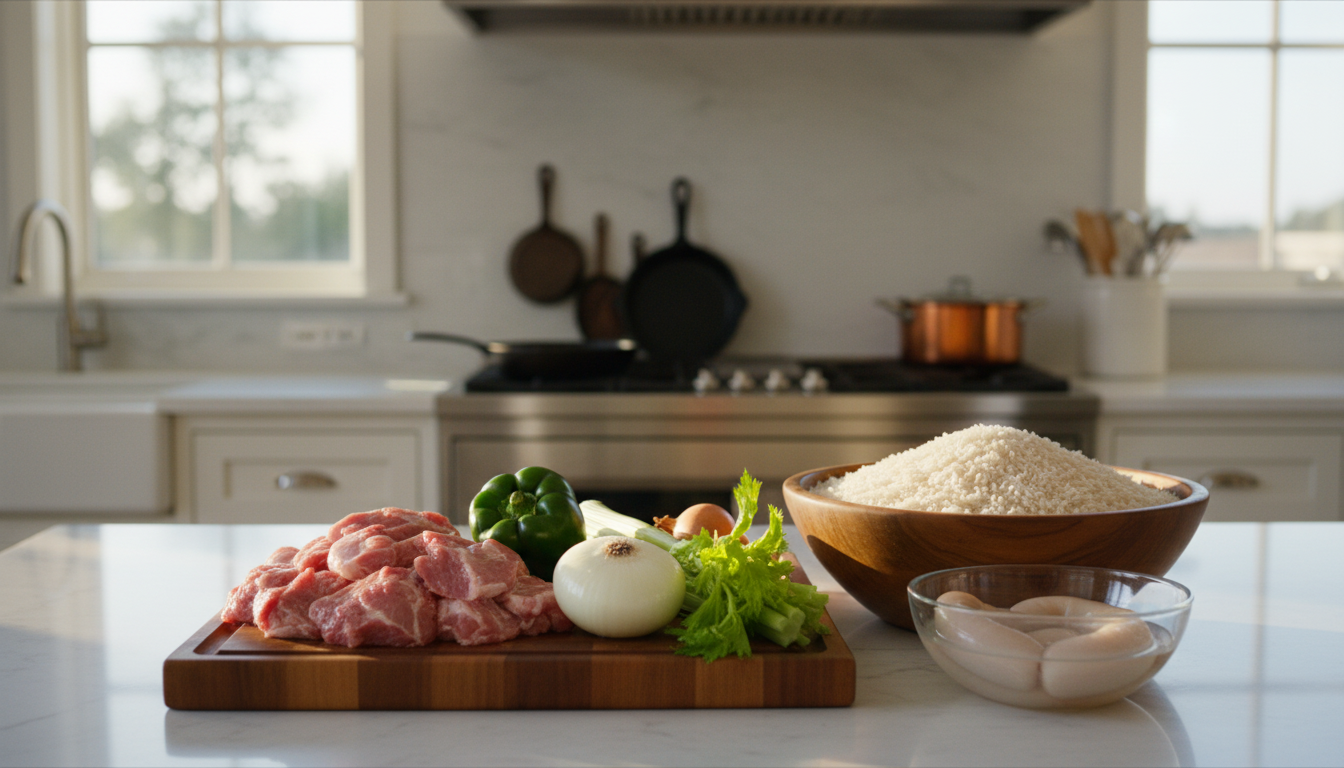
From its 14th-century French blood-sausage roots to today's smoky links sold in Louisiana gas stations, boudin has morphed into a multicultural emblem of Cajun identity that readers will learn to source, cook, and celebrate with confidence. The article demystifies the sausage's journey--how Acadian settlers swapped blood for local rice, how German butchers and Afro-Caribbean spices fused into the now-classic pork-shoulder-and-liver filling bound by the "Holy Trinity" of peppers, onions, and celery--so home cooks understand why every squeezeable bite tastes like Louisiana history. It then turns practical, revealing the ideal 80/20 meat-to-rice ratio, the toothpick-slit trick that keeps casings from bursting, and the oven-steam-fry spectrum that yields everything party-crisp boudin balls to late-night microwave links, while also exploring Texan, vegetarian, and whole-grain twists that prove the tradition is still evolving. Along the way, readers pick up insider know-how on storing leftovers safely, reheating without drying, and pairing with Creole mustard or a simple cold beer, ensuring no precious link ever goes to waste. Ultimately, the piece equips food lovers not just to cook boudin, but to join the playful civic pride that crowns towns "Intergalactic Boudin Capitals," turning every meal into a tasty tribute to resilience, resourcefulness, and community.
Understanding Boudin: Origins and Basics
From medieval French blood sausage to Louisiana's cayenne-spiced pork-and-rice links, boudin evolved through Acadian boucheries, German charcuterie know-how, and 1930s rice farming into a living edible timeline you can still buy hot on a Saturday morning.
Historical Roots of Cajun Boudin
Boudin started its journey in 14th century France, where two types ruled the kitchen: boudin noir (blood sausage) and boudin blanc (white sausage) [2]. When French colonists sailed to Louisiana, they packed these recipes along with their hopes for a new life. The first American mention comes from Lewis and Clark's 1805 journals, describing a French fur trapper who stuffed buffalo intestine to create what they called a "forest delicacy" [2]. As French Acadians settled in southwest Louisiana, they transformed boudin through community hog butchering events called boucheries [1][2].
These gatherings weren't just about making sausage--they were about survival and community. The original Louisiana version, called "red boudin," used fresh hog's blood instead of rice [1]. Two major changes reshaped this traditional dish. First, German immigrants arrived between the 1870s and 1890s, bringing their sausage-making expertise [2][3].
Chef John Folse notes that Germans who came in 1725 taught Cajuns professional techniques and introduced various forms of charcuterie [3]. Second, rice farming expanded across Cajun country, eventually making its way into boudin recipes--first documented in the Lafayette Daily Advertiser in 1939 [2]. By the 1940s, shops like Johnson's Grocery in Eunice began selling hot boudin as a Saturday tradition, marking the shift from home-only production to commercial availability [2][3]. Through this melting pot of influences--Native American, Spanish, Afro-Caribbean, and German--Louisiana created something entirely new: a pork-and-rice sausage seasoned with cayenne that barely resembles its French ancestors [2].
Cultural Significance in Louisiana and Beyond
In Louisiana, boudin is far more than just food--it's a living connection between past and present. The tradition grew from the boucherie, where Cajun families gathered to butcher hogs and use every part of the animal [4]. These weren't just work days; they were community celebrations filled with food preparation, storytelling, music, and dancing that could stretch on for days [2]. The most prized creation from these gatherings was boudin rouge, made with fresh blood collected during butchering [2]. Before 1930, you could only get boudin by attending a boucherie [2].
That changed as commercialization brought this community food to the masses, transforming it into an everyday staple. Today, the passion for boudin runs so deep that Louisiana towns compete for increasingly creative titles. Scott holds the official crown as "Boudin Capital of the World," churning out 1.5 to 2 million pounds each year [4]. Not to be outdone, Broussard declared itself the "Intergalactic Boudin Capital of Positive Infinity," while Jennings went with "Boudin Capital of the Universe" [4][2]. This playful rivalry reveals something deeper--boudin is woven into the fabric of local identity.
The Southern Boudin Trail now guides food lovers through Acadiana, where gas stations along Interstate 10 often serve outstanding versions [4]. In Lafayette, residents regularly kick off their mornings with a hot link, creating a culture of early-morning "boudin tours" [2]. Annual celebrations like the Scott Boudin Festival keep the tradition alive through cook-offs and eating contests [4][2]. Even as it evolves, boudin remains that delicious link connecting today's Louisiana to its multicultural roots.
Key Differences Between Boudin Blanc, Noir, and Vert
Understanding the different boudin varieties helps trace how this sausage evolved from France to Louisiana. The original French versions--boudin blanc and boudin noir--arrived with 18th-century colonists [2]. French boudin blanc was quite different from what we know today: a smooth meat paste, sometimes containing unusual ingredients like acorns, gently poached in a terrine [2]. Boudin noir (called boudin rouge in Louisiana) was a blood sausage made with fresh pig's blood [2]. In early Louisiana, boudin rouge stood out as the prize of the boucherie.
These community pig butcherings provided the fresh blood essential for this special sausage [2]. But times change, and so do tastes. Today's Cajun boudin barely resembles its French ancestors, thanks to a process called Creolization [2]. While traditional blood boudin has faded--partly due to food safety regulations and changing preferences--Louisiana's version evolved into something unique [2]. The addition of rice (first recorded in 1939), cayenne pepper from Spanish and Afro-Caribbean kitchens, and German sausage-making techniques (brought by immigrants between 1870-1890) created a completely new product [2].
Interestingly, the German Blutwurst, with its oats, pork, and seasonings, shares similarities with Louisiana's boudin rouge [2]. Today's Cajun boudin--that perfect blend of pork, rice, and regional seasonings--showcases how food traditions adapt when cultures meet. Though it shares a name with its French predecessors, modern boudin is distinctly Louisiana's own [2]. And like any good cooking vessel that improves with use, boudin has only gotten better through its transformation, proving that the best recipes often come from blending traditions with local ingredients and know-how.
Core Ingredients: What Is Boudin Made Of
A true Louisiana boudin balances 80% pork-shoulder-and-liver mix with 20% cooked white rice, turning humble scraps into a moist, meal-in-a-link sausage whose soul lies in that 3:1 pork-to-liver ratio locals will fight over.
Primary Protein: Pork Shoulder and Optional Liver
Let's break down what makes boudin so distinctive, starting with the proteins that form its foundation. The main player is pork shoulder (sometimes called pork butt), which you'll want to cut into 1-inch cubes for even cooking [4]. This cut is perfect because it has just the right balance of fat to keep your boudin moist and flavorful--no dry, crumbly sausage here [4]. Now, here's where things get interesting: liver.
Traditional boudin includes pork liver, though some makers use chicken liver for a milder flavor that still adds that deep, savory quality you're after [4]. The classic ratio? About 3:1 or 4:1 pork to liver, though you can adjust based on your preference [4]. Some folks skip the liver entirely, but purists will tell you it's essential for authentic flavor.
When assembling your boudin, aim for roughly 80% meat mixture to 20% rice--this proportion creates the perfect texture and ensures every bite is satisfying [5]. Of course, regional preferences vary widely across Louisiana. Some boudin makers lean heavily on the liver for a more intense flavor, while others keep it pork-forward and mild. The debate over which style reigns supreme runs so deep in Cajun country that, as the locals say, these arguments "have been known to break up marriages" [5].
The Rice Component and Its Role in Texture
Rice is what transforms boudin from just another sausage into something uniquely Louisiana. Unlike traditional European sausages that are all about the meat, boudin gets its signature texture from cooked white rice--we've already established that ideal 80/20 meat-to-rice ratio that makes each link a complete meal [4]. Here's a fun fact: rice wasn't always part of the recipe. As discussed in the history section, it first appeared in print in 1939 when the Lafayette Daily Advertiser listed boudin among "Rice Dishes of Louisiana" [4].
The timing made perfect sense--rice cultivation was booming across Cajun parishes, making it an affordable way to stretch precious meat. So what does rice actually do for your boudin? It's both a binder and a moisture keeper, creating that distinctive squeezable texture boudin lovers crave [4]. Stick with Louisiana long-grain rice if you can find it, and always cook it fully before mixing--this prevents any grittiness in your final product [4].
A word of caution: rice makes boudin trickier to handle than regular sausages. It expands when heated, which can cause casings to burst if you're not careful [6]. This expansion is also what gives boudin its satisfying, almost creamy mouthfeel that sets it apart from typical meat-only sausages [6]. For a healthier twist, try substituting brown rice--you'll get similar results with added fiber and nutrients [4].
The Cajun Trinity: Onion, Celery, Bell Pepper
No Cajun dish worth its salt skips the Holy Trinity--that perfect trio of green bell pepper, onion, and celery that forms the flavor foundation of boudin [7]. This Louisiana adaptation of French mirepoix swaps out carrots for bell peppers that thrived in local soil, creating a distinctly regional flavor base [7].
Chef Paul Prudhomme coined the "Holy Trinity" name as a nod to Louisiana's Catholic roots and these vegetables' sacred status in the kitchen [8]. For boudin, you'll dice these aromatics and sauté them until tender--this is where a quality
Seasonings That Define Authentic Flavor
Getting the seasoning right is what separates good boudin from great boudin. Start with your basics--salt and black pepper--then bring on the heat with cayenne, the spice that gives boudin its Louisiana soul [9]. Fresh garlic is non-negotiable; add it generously during cooking so it mellows and infuses everything with its flavor [9]. Heat levels vary wildly across Acadiana. Some boudin makers crank up the spice until your eyes water, while others keep it balanced to let the pork and liver sing [5].
Want more kick? Toss in some jalapeños for a different heat profile that won't overpower the other flavors [9]. Fresh herbs are your secret weapons here. Parsley brightens the whole mixture, while green onions add layers of mild allium flavor that play nicely with the stronger onions in your trinity [9]. Speaking of onions, stick with white or yellow varieties--their sharp bite cuts through the richness better than sweet purple onions ever could [4].
Here's the key: all these seasonings need to meld with your cooking liquid, which you'll add back to the mixture before stuffing. This ensures every grain of rice and bit of meat carries that perfect flavor balance [4]. Done right, your boudin will taste just as amazing whether you're squeezing it from the casing at a roadside stop or plating it for Sunday dinner.
Variations and Regional Twists
From Louisiana links you squeeze straight into your mouth to Texas-spelled "boudain" balls fried crisp for on-the-go eating, the same rice-and-meat filling shape-shifts across regions and cooking styles to deliver two signature textures and a playground of new stuffed-pepper and mushroom twists.
Boudin Balls vs. Traditional Links
Traditional boudin links and boudin balls represent the most distinct forms of this iconic Cajun specialty. Traditional links consist of the rice-meat mixture stuffed into natural hog casings, while boudin balls transform the same ingredients into breaded, deep-fried spheres. The classic link's defining characteristic is its unique eating experience--traditionally consumed by squeezing the filling directly from the casing into your mouth [5]. This "squeezability" comes from boudin being steamed rather than smoked like traditional sausage, creating a moist texture unlike any other meat product [5].
Meanwhile, boudin balls offer a different textural experience, featuring a crispy exterior protecting the same savory filling. These deep-fried spheres serve as perfect finger food and travel better than links [10]. While both forms start with identical ingredients, the preparation method creates distinctly different experiences. The traditional link maintains its soft interior with a slight resistance from the casing--particularly when grilled to create a crispy exterior while preserving the moist interior [11].
Cooking methods vary significantly between forms. Traditional links can be flame-grilled for a crispy casing while maintaining a soft interior, steamed for more uniform texture, baked in a 425 degreesF oven for 10-15 minutes, or pan-seared in a hot skillet [11]. Boudin balls, by contrast, are exclusively deep-fried to achieve their signature crunch [10]. Beyond these two primary forms, creative chefs have developed numerous variations, including using the boudin mixture as filling for stuffed mushrooms, bell peppers, and other dishes where the flavorful rice-meat blend can absorb and complement other ingredients [10].
Southern Texas Boudain Adaptations
The journey across the Sabine River transforms boudin into a distinctly Texan creation with its own identity. Most notably, Texans spell it "boudain" rather than the Louisiana "boudin"--a difference that emerged in the early 1900s when both spellings were common in Louisiana before the former became standardized in Southeast Texas [12]. DJ's Boudain humorously claims they added the "a" because "DJ's boudin was awesome" [13].
Beyond spelling, Texas-style boudin features significant textural differences--intact grains of white rice replace the pulverized rice of Louisiana versions, while the meat appears in larger, chunkier pieces primarily from pork shoulder [13]. Texas boudin generally lacks the distinctive liver and heart flavors that define traditional Cajun varieties, creating a milder flavor profile [13]. The cooking method fundamentally changes west of the Sabine, where smoking replaces steaming as the preferred technique.
In Houston particularly, boudin features prominently in barbecue establishments where the coarser texture absorbs post oak smoke flavor, and the casings develop a distinctive snap from the higher, drier cooking temperatures [13]. Henderson & Kane General Store in Houston's Sixth Ward exemplifies this Texas approach with a coarse-textured boudin that's smoked for several hours and offered in both spicy and mild variations [13]. These regional adaptations reflect increasing demand from Cajun transplants in East and Central Texas who have influenced the spread of boudin culture beyond its Louisiana homeland [12].
Vegetarian and Low‑Fat Alternatives
Vegetarian boudin reimagines the Cajun classic using plant-based proteins while maintaining traditional flavor profiles. Mushrooms serve as the primary meat substitute in many recipes, providing umami depth when finely chopped and sautéed to remove excess moisture [15]. Some innovative approaches utilize unexpected ingredients like banana peels combined with vital wheat gluten for structure [14]. The Cajun trinity--onions, celery, and bell peppers--remains essential in vegetarian versions, alongside traditional seasonings including thyme, oregano, paprika, and cayenne [15][16].
Achieving proper texture presents the main challenge, as plant-based versions tend to crumble without sufficient binding agents. Most successful recipes incorporate vital wheat gluten (75-90g per batch) to create the chewy, cohesive texture that defines boudin [14][16]. Alternative binders like chia seeds work for gluten-free versions, though texture suffers [16]. Traditional casings require adaptation--options include cellulose casings (which must be removed before eating), rice paper wrappers for spring-roll-like presentation, or tofu skin from Asian markets [15].
Sun-dried tomatoes frequently appear in vegetarian recipes, providing umami richness that compensates for missing liver flavor, though some find them overpowering [14][16]. Liquid smoke (about 1 teaspoon) can replace harder-to-find smoked ingredients while maintaining boudin's characteristic depth [16]. These plant-based alternatives inherently contain less fat than traditional pork versions while preserving the spicy, aromatic profile that defines authentic boudin.
Modern Twists with Specialty Grains
Traditional boudin relies on long-grain Louisiana white rice as a fundamental component, typically maintaining an 80% meat to 20% rice ratio [5]. However, innovative chefs and home cooks are increasingly experimenting with specialty grains to create contemporary versions that offer different nutritional profiles while preserving boudin's distinctive flavor. Brown rice and wild rice blends represent the most straightforward substitution, introducing an earthy flavor that complements the rich seasonings in traditional boudin [17].
These whole grain alternatives maintain the familiar texture while adding fiber and nutrients that white rice lacks. Quinoa has emerged as another popular alternative, with Cajun cooking enthusiasts reporting success using it in various traditional dishes [17]. One boudin lover shared, "I made a smothered steak with quinoa and gravy instead of rice and it was 🔥," while another noted that "Gumbo with quinoa... yes, works very well" [17].
Some specialty meat markets have begun offering cauliflower boudin for carb-conscious consumers, though opinions remain divided on its success [17]. One self-described "boudin connoisseur" who has tried "fried boudin, smoked boudin, seafood boudin, alligator boudin, blood boudin, chicken boudin, all types of boudin," reported being "not a fan" of the cauliflower version [17]. These innovations reflect the evolving nature of Cajun cuisine, adapting traditional recipes to contemporary dietary preferences without abandoning the core flavors that define boudin's cultural heritage.
How to Cook Boudin at Home
Thaw boudin safely in the fridge, slit the casing every inch to stop bursts, then roast at 300 degreesF--turning every 5 minutes until it hits 160 degreesF--for a crisp, golden snap that keeps the filling moist.
Preparing Boudin for Heating: Thawing and Slicing
Getting frozen boudin ready for cooking doesn't have to be complicated. Always thaw in the refrigerator for 4-6 hours--the rice filling can quickly develop bacteria at room temperature [18]. In a rush?
You can cook boudin straight from frozen, just add 5-10 minutes to your cooking time [19]. Here's a pro tip: before cooking, use a toothpick to make small slits every inch along the casing [18]. This simple step prevents the casing from bursting as the rice expands--trust us, it makes all the difference.
Since boudin's rice content makes it prone to sticking, handle it gently with long-handled tongs [18]. Save any cutting for after cooking, when kitchen scissors can easily snip links into bite-sized portions [19].
Oven Method for Crispy Casing
Looking for perfectly crispy boudin? The oven method is your best bet. Start by preheating to 300 degreesF, then arrange your links on a lightly-oiled baking sheet--give them some breathing room for even cooking [20]. Here's where patience pays off: roast for 20 minutes, turning every 5 minutes [20][21].
This regular rotation ensures that beautiful golden-brown crust without any burnt spots. Keep an eye on the internal temperature--you're aiming for at least 160 degreesF for safe eating [20]. What makes this method special is how the steady, dry heat creates that satisfying snap when you bite in, while keeping the filling perfectly moist. Want to take it up a notch?
Dust with Cajun seasoning before roasting for an extra layer of flavor [21]. This approach shines when you're serving boudin as the star of the meal--that gorgeous browning makes for an impressive presentation.
Stovetop and Skillet Techniques
The stovetop method brings speed and control to your boudin cooking.
Heat your skillet to medium-high--a well-seasoned
Quick Microwave Guide for Busy Cooks
When time's tight, the microwave has your back. Place thawed boudin on a microwave-safe plate with a paper towel on top to catch any splatters [20]. Microwave on high for 2-3 minutes, flip, then heat for another 1-2 minutes until you hit that safe 160 degreesF internal temperature [20].
Pro tip: rotating halfway through ensures even heating [23], though some boudin makers recommend just 1.5 minutes per link [24]. Here's the crucial part many people miss: let it rest for 2-3 minutes after microwaving [23]. This pause lets the temperature even out and keeps the filling from spilling everywhere when you cut into it.
Sure, you won't get that crispy casing, but you'll preserve all those authentic flavors and that perfect moist texture. This method's a lifesaver for busy mornings when you want boudin with your eggs or need to whip up a quick breakfast scramble.
Serving Ideas and Pairings
From standalone link-and-crackers to sizzling tacos, omelets, or a pickled-vegetable board, boudin's versatility lets you turn one Cajun sausage into an entire menu of meals.
Classic Sides: Beans, Mustard Greens, and Rice
Boudin's all-in-one nature makes it a complete meal on its own [25]. But if you want to round out your plate, traditional Cajun sides work beautifully. Beans are the most common accompaniment--either simply prepared or smothered with the same seasonings used in the boudin [26].
Mustard greens offer a welcome contrast, their slight bitterness cutting through boudin's richness, though you'll find them less often in restaurants these days [26]. Surprisingly, rice often appears as a side despite already being in the boudin. As one local puts it, "A cajun meal is typically meat with rice and gravy, and a bean, and another side" [26].
This extra rice helps balance the spices and stretches the meal further. While boudin certainly stands alone--grab a link and some crackers for a quick meal--these traditional sides create a more complete dining experience.
Creative Uses: Boudin Tacos, Omelets, and Salads
Want to get creative with boudin? Here are some favorite ways to transform this versatile sausage. For boudin tacos, remove the filling from its casing and crisp it up in a hot skillet--then load it into warm tortillas with cilantro, onion, and lime. Morning people love boudin omelets: just add the pre-cooked filling to your eggs while they're still soft.
For a surprising salad topper, pan-sear crumbled boudin until crispy and scatter over mixed greens with vinaigrette. The possibilities don't stop there. Try boudin in sandwiches, kolaches, stuffed peppers, or rolled into egg rolls. Some adventurous cooks even make boudin pie.
For entertaining, create a Louisiana-inspired board featuring boudin alongside pickled vegetables--red onions, jalapeños, and cornichons work particularly well [27]. Serve everything on a
Sauces and Condiments That Enhance Flavor
The right sauce can take your boudin experience to the next level. Tabasco sauce remains the classic choice--many locals keep a bottle in their car specifically for roadside boudin stops [5]. But don't stop there.
Creole mustard sauces offer the perfect tangy contrast to boudin's richness. Mix mayonnaise with Spicy Creole Mustard for a simple dipping sauce, or follow Chef Emeril's lead by adding minced garlic and cayenne for extra kick [28][29]. Ranch dressing and remoulade also pair beautifully with boudin [28].
The mayo-mustard-horseradish blend in remoulade cuts through the richness while highlighting those Cajun spices. Your sauce choice depends on the boudin itself--cooling ranch for spicier versions, zesty mustard sauces for milder ones. Set out several options and let everyone find their perfect match.
Storing, Reusing, and Sustainable Practices
Master the art of boudin stewardship: refrigerate it airtight for 3-4 days, freeze it labeled for 2-3 months, and transform leftovers into crispy taco filling or an "Ultimate Breakfast Hot Dog" instead of just reheating.
Proper Refrigeration and Freezer Guidelines
Boudin lasts 3-4 days in the refrigerator when stored properly, whether cooked or uncooked. Keep it tightly wrapped or in an airtight container to prevent odor absorption and moisture loss [30]. Before refrigerating, cool boudin completely and maintain your fridge at 40 degreesF (4 degreesC) or below to ensure food safety. Check for spoilage signs--off smell, discoloration, or slimy texture--before consuming.
For longer storage, freezing extends boudin's shelf life to 2-3 months [30]. Let it cool completely before wrapping tightly in plastic wrap, aluminum foil, or vacuum-sealing to prevent freezer burn [30]. Always label with the date so you can track storage time. When ready to use frozen boudin, you have two options: thaw in the refrigerator as covered in our cooking section, or cook directly from frozen (adding 5-10 minutes to cooking time) [30].
Never thaw at room temperature, which allows bacteria to multiply in the rice filling [30]. While boudin remains technically safe beyond three months in the freezer, quality declines over time, affecting both texture and flavor [30]. The good news? Frozen boudin defrosts remarkably quickly while maintaining its distinctive qualities--making it perfect for stocking up when you find your favorite variety [30].
Repurposing Leftovers to Reduce Waste
Leftover boudin offers numerous creative opportunities beyond simple reheating. Remove boudin from its casing and crumble it into a hot skillet to create crispy filling for tacos, omelets, or salad toppings [31]. This approach honors the Cajun tradition of ensuring abundant food for guests while minimizing waste.
For a complete transformation, incorporate boudin into breakfast dishes by making an "Ultimate Breakfast Hot Dog" - wrap a sausage in an omelet and place it inside a hot dog roll with ketchup or brown sauce [31]. When reheating is necessary, steaming preserves moisture and flavor better than microwaving: place links in a steamer basket over boiling water for about 10 minutes [31]. For a crispy exterior, air fryer reheating at 350 degreesF for 8 minutes (flipping halfway) creates the perfect texture balance while maintaining the interior's moisture [31].
This approach to food conservation reflects deeper Cajun cultural values where communal eating combines with practical resource management - "a big part of Cajun culture is ensuring that everyone has enough to eat when they come over so Cajuns tend to get more than enough so that everyone is satisfied" [31].
Choosing Quality Cookware for Optimal Results
Different boudin cooking methods call for specific cookware materials to achieve the best results. For that perfect crispy casing discussed in our cooking section, nothing beats cast iron's exceptional heat retention and even distribution [32].
The consistent high temperatures make it ideal for searing boudin links, creating that sought-after contrast between crispy exterior and moist interior [32]. When cooking boudin without casings or making boudin balls, a quality non-stick surface prevents sticking and allows for minimal oil usage--helpful when working with boudin's already-rich filling [34].
Caring for Your Kitchen Tools to Extend Their Life
Proper maintenance of your cookware directly impacts boudin cooking success. For cast iron--excellent for achieving crispy boudin casings--avoid common mistakes like soap overuse or dishwasher cleaning, which strips away the protective seasoning [35]. Instead, follow this simple routine: clean with hot water while the pan is still warm, gently scrub with a brush (never steel wool), dry thoroughly, and apply a light oil coating [36].
For stubborn boudin residue, kosher salt works as a gentle abrasive [35]. Temperature control is crucial when cooking boudin--cast iron's exceptional heat retention means medium-low heat is usually sufficient. Start lower than you think necessary and gradually increase to achieve perfect browning without burning the rice filling [36].
Don't give up on neglected cast iron--even rusty pans can be restored. Use a 1:1 solution of white distilled vinegar and hot water to remove rust, scrub gently, then re-season by applying thin vegetable oil layers and baking at 450 degreesF for 30-minute intervals [35]. This restoration process transforms worn cookware into perfectly functional pieces ready for your next boudin adventure [35].
- Louisiana boudin evolved from French blood sausage into a pork-and-rice link seasoned with cayenne.
- Use 80% pork shoulder/liver to 20% cooked long-grain rice for authentic texture and flavor.
- Steam or grill links to 160 degreesF; slit casings first to stop bursting from rice expansion.
- Boudin balls are the same mix breaded and fried; Texas versions smoke the links.
- Refrigerate 3-4 days or freeze 2-3 months; reheat by steaming to keep moisture.
- Leftover filling crisps in a skillet for tacos, omelets, or salad toppings.
- Cast-iron searing gives the best snap; medium-low heat prevents burning the rice.
- https://www.cajunfoodtours.com/blog/boudin-the-cajun-sauage/
- https://64parishes.org/entry/boudin
- https://acadianaprofile.com/tracing-the-roots-of-boudin-from-europe-to-the-cajun-prairie/
- https://www.beststopinscott.com/cajun-boudin-sausage/
- https://acadianatable.com/2023/01/02/the-great-boudin-debate/
- https://www.dioro.com/blogs/news/how-to-cook-boudin-sausage?srsltid=AfmBOooxpF5F_zC9CeJP3wpfhkzoUVLEFoVt9cLFynMB9oU1iV9x_PFM
- https://southern-bytes.com/what-is-the-cajun-holy-trinity/
- https://www.allrecipes.com/article/what-is-the-cajun-holy-trinity/
- https://www.homesicktexan.com/boudin-recipe-boudain/
- https://www.billysboudin.com/boudin-everything-you-ever-wanted-to-know/?srsltid=AfmBOorTPmSKV19402lhFlXD4mzyizd6nY4y8WDFGEkfquVpMXZK172L
- https://www.thespeckledpalate.com/boudin-101/
- https://www.billysboudin.com/boudin-everything-you-ever-wanted-to-know/?srsltid=AfmBOoriPkDaXeBRuDDOd-hxKHPkckF5qK0Ici_jsBZ4W1W_XRgpzzu7
- https://fitfoodbyjessi.wordpress.com/2021/08/27/vegan-banana-peel-boudin/
- https://www.reddit.com/r/veganrecipes/comments/1kyc8aa/im_work_shopping_a_vegan_boudin_recipe_casing_help/
- http://chubbyvegetarian.blogspot.com/2012/03/vegetarian-boudin-sausage.html
- https://www.reddit.com/r/Acadiana/comments/bzfzo3/quinoa_boudin/
- https://www.dioro.com/blogs/news/how-to-cook-boudin-sausage?srsltid=AfmBOorrkIeDLWmaoViUcgsJr0q8vovCjjRcJxYU5uLywg1tO9e6Bz8H
- https://www.juneaus.com/boudin
- https://cajunoriginal.com/cooking-tips/boudin-tips/
- https://creole.net/blog/the-best-ways-to-cook-boudin-at-home-and-how-its-made/?srsltid=AfmBOorNhiORSb7gBa5E2LloVp2MEuZn6pSQe0EKvuDWBXseYVgsw11L
- https://www.reddit.com/r/cajunfood/comments/196j7q8/pan_frying_boudin_with_a_teeny_bit_of_butter/
- https://bigeasyfoods.com/product/mild-pork-boudin-14oz/
- https://donsspecialtymeats.com/cooking-instructions/
- https://honest-food.net/cajun-boudin-sausage-recipe/
- https://www.reddit.com/r/cajunfood/comments/zb01b5/louisiana_side_dishes/
- https://www.thespeckledpalate.com/boudin-board/
- https://beyondgumbo.com/2023/04/30/cajun-boudin-balls-with-spicy-mustard-dip/
- https://www.emerils.com/127990/boudin-balls-creole-mustard-dipping-sauce
- https://www.hangrypants.com/how-long-does-boudin-last-in-the-fridge/
- https://www.beststopinscott.com/no-such-thing-as-leftover-boudin/
- https://shop.ttkprestige.com/blog/post/buying-guides/cast-iron-vs-nonstick-cookware?srsltid=AfmBOoqvZXp923x0TXI3C9gVlOpa6tDCxIzpsW2pqg5HzOHtcMdrKVrg
- https://stahlkitchens.com/blogs/news/cast-iron-vs-non-stick?srsltid=AfmBOord1Z_FzLr1pLUsolhiKebJ_giEFOIZP_C7MZD0CYV_tXLkKsLs
- https://www.marthastewart.com/1541812/how-choose-between-stainless-steel-nonstick-cast-iron-cookware
- https://www.billysboudin.com/cast-iron-care/?srsltid=AfmBOoqnslwBpNQQTeByjjUZrgEvYXve8peD6ph72rXGcfM5wbReFyZt
- https://www.lodgecastiron.com/blogs/story/beginners-guide-cast-iron-cleaning-and-care?srsltid=AfmBOooOGfI6MI7tn1ZxKj5a_VgSK5zHWip4Idt7sEQpD1D64ZLLCufn