

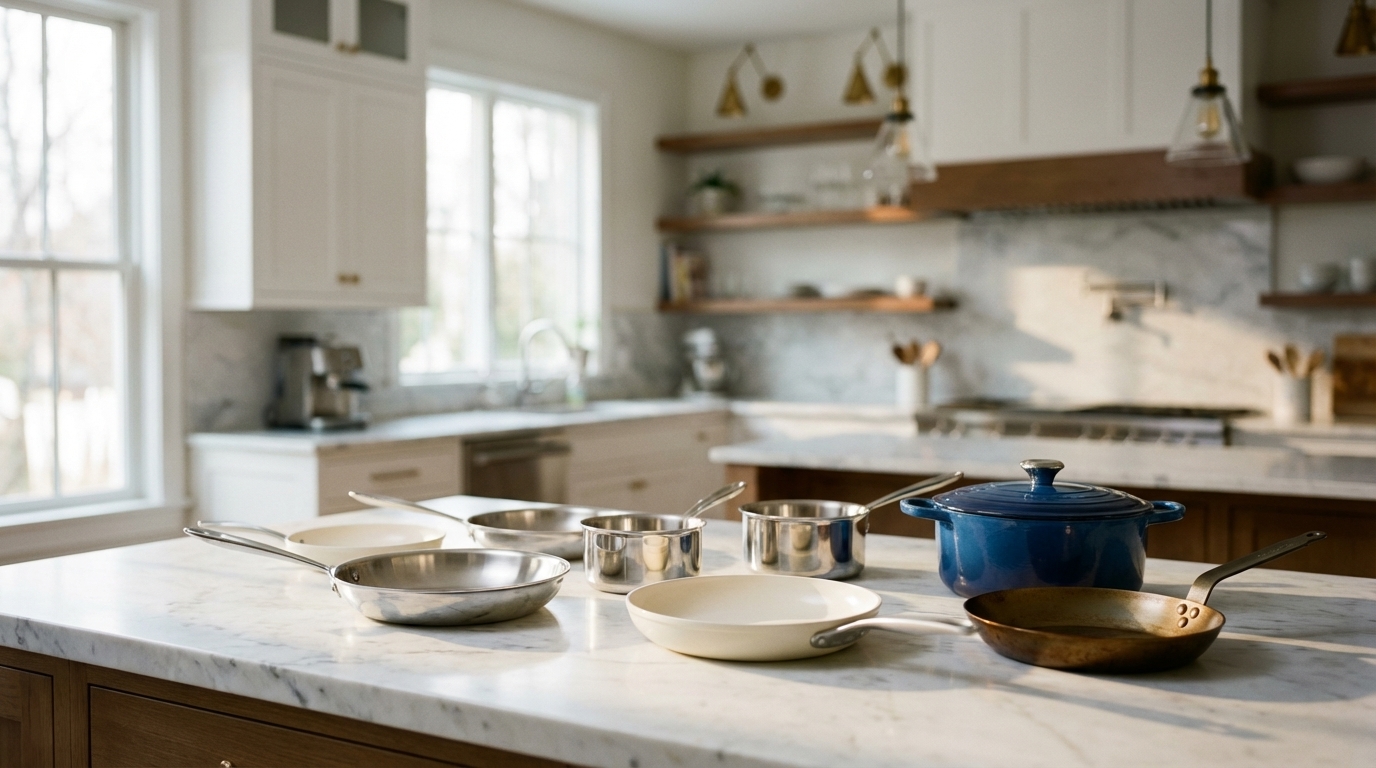
“Clean Cookware Decoded” is a one-stop guide for anyone who wants healthier, safer meals without sacrificing performance, showing you exactly how to spot pans free of PFAS, lead, and other hidden toxins and why upgrading to stainless clad, ceramic, carbon steel, copper, or enameled cast iron protects both flavor and long-term wellness. The article unpacks each material’s superpower—stainless for warp-proof, non-reactive weeknight workhorses; ceramic for fat-free, high-heat breakfasts that slide right out; carbon steel for restaurant-grade sears that get better with age; copper for instant, precise control over finicky sauces; and enameled cast iron for low, slow braises that never taste metallic—so you can match pieces to the way you actually cook. You’ll learn to read labels skeptically, favor factories in France, Germany, Italy, and the U.S. for strict safety oversight, and care for your pans so they last decades, not months. Start with a single toxin-free skillet, add a complementary saucepan and Dutch oven, and you’ll own a clutter-free core that out-cooks most restaurant gear while keeping questionable chemicals off your plate and out of the planet’s landfills.
Introduction: Why Clean Cookware Belongs in Every Kitchen
Swap one toxic pan for a PFAS-free, lab-tested skillet and you’ll taste the difference—because cookware that can’t leach, peel, or off-gas is the fastest way to turn every 2025 meal into pure, controlled flavor.
Home Cooking Gives You Control Over Ingredients and Tools
Cooking at home puts you in charge of what lands on your plate—and what your food touches along the way. Take-out containers, mystery oils, and worn-out non-stick surfaces never enter the equation when you’re the one holding the spatula. The pan you reach for matters just as much as the produce you chop.
A clean pot or skillet won’t leach metals, peel coatings, or off-gas at high heat, so the flavors you build stay pure. Start 2025 with a clean slate—and cleaner cookware. Swapping one questionable piece for a non-toxic alternative is the simplest way to protect both dinner and the people eating it.
Control doesn’t stop at ingredients; it extends to temperature, timing, and technique. A reliable, health-safe vessel gives you the confidence to sear, simmer, and sauté without second-guessing what might sneak into your meal.
The Rise of Non-Toxic Cookware Demand
Shoppers are no longer willing to trade convenience for safety. Headlines about forever chemicals and heavy-metal recalls have pushed PFAS-free, lead-free, and cadmium-free from niche to mainstream. Kitchen stores now dedicate entire walls to “clean” labels, and manufacturers race to meet European and U.
S. health benchmarks that were barely mentioned a decade ago. Social feeds overflow with seasoning tutorials, metal-spatula tests, and stovetop science experiments—all proof that cooks want gear that performs without compromising long-term wellness.
The shift is measurable: searches for non-toxic pans spike every January, and brands that once hid material specs now flaunt third-party lab results.
How This Guide Helps You Shop Smarter and Cook Healthier
We’ll compare stainless, ceramic, carbon steel, copper, and enameled cast iron—five materials that meet rigorous safety standards yet cook nothing alike.
You’ll learn which pieces excel at high-heat searing, which need nothing more than a drop of oil, and which can move from stovetop to oven without a second thought.
By the end, you’ll know exactly what to look for, what to avoid, and how to build a small, versatile set that makes every meal cleaner, easier, and a lot more fun.
What Makes Cookware 'Clean' and Safe for Daily Use
Choose cookware made from inert materials like stainless steel, ceramic, glass, or seasoned cast iron that’s certified free from PFAS, PFOA, PTFE, BPA, lead, and cadmium and manufactured under strict health and safety regulations in countries like France, Germany, Italy, or the United States to eliminate daily chemical exposure and ensure your pan cooks your food without becoming part of it.
Free from PFAS, PFOA, PTFE, BPA, Lead, and Cadmium
Clean cookware starts with what it doesn't contain. The most important thing is that it's free from PFAS, PFOA, PTFE, BPA, lead, and cadmium—chemicals that have been linked to health concerns when they leach into food during cooking. These substances are often found in traditional non-stick coatings, plastic handles, or low-quality metal alloys that can break down over time.
When these chemicals are heated, they can release toxic fumes or migrate into your meals. PFAS, often called 'forever chemicals,' are particularly concerning because they accumulate in the human body and environment. By choosing cookware that's certified free from these substances, you're eliminating a major source of daily chemical exposure in your kitchen.
The safest materials are naturally inert—like stainless steel, ceramic, glass, or properly seasoned cast iron. These materials don't break down under normal cooking temperatures, so they won't introduce foreign substances into your food. It's a simple concept: the pan should cook your food, not become part of it.
Manufactured Under Strict European and U.S. Health Standards
The manufacturing process matters just as much as the raw materials. Clean cookware should be produced in facilities that follow strict health and safety regulations—the kind enforced in countries like France, Germany, Italy, and the United States. These places have the most rigorous standards for worker safety, environmental protection, and product testing.
This means every step—from sourcing raw metals to applying coatings—is monitored for potential contamination. Factories must prove their processes don't introduce harmful substances, and finished products undergo testing to verify they meet safety standards. It's not just about avoiding banned chemicals, but ensuring no unexpected toxins sneak in during production.
When you buy cookware made under these strict standards, you're getting more than just a safe product. You're also supporting manufacturing practices that protect workers and the environment from toxic exposure. Clean cookware should be clean for everyone involved in its lifecycle.
Naturally Non-Stick Surfaces That Reduce the Need for Excess Oil
The best clean cookware offers natural non-stick properties without synthetic coatings. Materials like well-seasoned carbon steel or enameled cast iron develop a smooth cooking surface over time that releases food easily. This means you can cook with minimal oil, butter, or other fats—great for healthy cooking without sacrificing performance.
Ceramic coatings made from silicon dioxide (essentially refined sand) provide another clean option. These create a hard, glass-like surface that's naturally smooth and non-reactive. Unlike traditional non-stick pans that rely on chemical coatings, ceramic provides easy food release through its physical properties rather than synthetic polymers.
When cookware naturally prevents sticking, you don't need to drown ingredients in oil to keep them from burning. A light coating is enough, letting the true flavors of your food shine through. Plus, cleanup requires less scrubbing and fewer harsh detergents—better for your cookware, your health, and the environment.
Top 5 Clean Cookware Materials and Their Unique Strengths
Rust-proof 5-ply stainless steel and chemical-free ceramic non-stick give you pro-level durability and effortless food release without toxins or metallic aftertaste.
5-Ply Stainless Clad: Rust-Proof, Non-Reactive, and Indestructible
{"heading":"Top 5 Clean Cookware Materials and Their Unique Strengths","subsections":[{"subheading":"5-Ply Stainless Clad: Rust-Proof, Non-Reactive, and Indestructible","paragraphs":["Stainless steel cookware already earns top marks for superb heat distribution, durability, and precision. To make 5-Ply Stainless Clad, layers of aluminum and aluminum alloy are sandwiched together with high-chromium, 18/10 stainless steel. The result is a high-performance pan that won’t rust, corrode, or leach into food. ","This construction creates a cooking surface that heats evenly across the entire pan, eliminating hot spots that can burn delicate sauces or proteins. The non-reactive nature means you can simmer tomato sauce or deglaze with wine without metallic flavors transferring to your food. These pans transition seamlessly from stovetop to oven, handling temperatures up to 800°F without warping. ","The polished exterior maintains its mirror finish through years of daily use, while the riveted handles stay cool during stovetop cooking. Professional chefs favor this material for its reliability during high-volume service, making it ideal for home cooks who want restaurant-quality results. "]},{"subheading":"CeramiClad™ Ceramic Non-Stick: Eco-Friendly Coating Without Chemicals","paragraphs":["Starting with a 5-Ply Stainless Clad base, CeramiClad™ pans receive multiple layers of ceramic coating derived from silicon dioxide, a natural component of sand. This creates a hard, shiny surface that releases food effortlessly without the chemicals found in traditional non-stick coatings. The ceramic material bonds molecularly to the stainless steel, creating exceptional durability. ","Unlike conventional non-stick surfaces that degrade at high temperatures, ceramic coating remains stable up to 450°F, allowing for proper searing and browning. The slick surface requires minimal oil for cooking, supporting healthier meal preparation while maintaining the convenience of easy cleanup. Eggs slide out cleanly, and delicate fish fillets release without tearing.
","The ceramic surface won't chip or flake when used with metal utensils, though silicone or wood tools extend its lifespan. This material excels for cooking techniques requiring precise temperature control, from crepes that need even browning to vegetables that benefit from minimal oil. "]},{"subheading":"Pre-Seasoned Carbon Steel: Restaurant-Grade Heat Retention and Natural Non-Stick","paragraphs":["Carbon steel combines cast iron's heat retention with stainless steel's responsiveness, creating pans favored in professional kitchens worldwide. The material arrives pre-seasoned with organic oils, eliminating the initial seasoning process while providing immediate non-stick properties. Each use builds additional seasoning layers, creating a naturally slick surface that improves over time. ","The exceptional heat retention makes these pans perfect for achieving restaurant-quality sears on steaks or creating perfectly crisped potatoes. Carbon steel responds quickly to temperature changes, giving cooks precise control over cooking intensity. The pans develop a distinctive patina that tells the story of countless meals while providing increasingly better release properties. ","These lightweight pans heat rapidly and distribute heat evenly across their surface, making them ideal for techniques requiring quick temperature adjustments. The naturally non-stick surface reduces the need for excess cooking fats, supporting healthier cooking methods while delivering professional results. "]},{"subheading":"Copper with Stainless Lining: Precision Heat for Delicate Sauces and Searing","paragraphs":["Copper represents the pinnacle of heat conductivity in cookware, responding instantly to temperature changes for ultimate cooking control. The lightweight construction reduces fatigue during extended cooking sessions, while the beautiful appearance makes these pans suitable for oven-to-table presentation. French artisans craft the copper exterior using traditional techniques refined over centuries. ","The stainless steel interior eliminates copper's reactivity with acidic foods while maintaining the metal's superior heat distribution.
This combination allows for precise caramel work, perfectly emulsified sauces, and delicate protein cooking that requires exact temperature control. The pans heat and cool rapidly, giving cooks immediate response when adjusting burner settings. ","Professional pastry chefs prize copper for sugar work, as the even heating prevents hot spots that could crystallize caramel. The material excels for sauces requiring careful temperature management, from hollandaise that needs gentle heat to reductions that demand consistent simmering. "]},{"subheading":"Enameled Cast Iron: Porcelain-Glass Surface for Superior Heat Retention","paragraphs":["Enameled cast iron represents over a century of cookware innovation, combining cast iron's exceptional heat retention with a porcelain-glass surface that requires no seasoning. The thick cast iron base provides steady, even heating that maintains temperature during long cooking processes. The glossy enamel coating creates a naturally non-stick surface that releases food beautifully. ","The porcelain enamel surface won't absorb flavors or odors, making it perfect for cooking aromatic dishes like curries or heavily spiced foods. The material transitions seamlessly from stovetop to oven, handling temperatures up to 500°F for techniques like braising or baking bread. The enamel coating comes in various colors while maintaining its appearance through years of use. ","This material excels for slow-cooking methods that develop deep flavors, from hearty stews that simmer for hours to no-knead bread that requires consistent heat. The self-basting lid design returns moisture to food, creating tender, flavorful results with minimal attention required.
How to Match Clean Cookware to Your Cooking Style
Choose stainless for weeknight versatility and carbon steel for crust-building speed, then keep one ceramic non-stick pan for flawless eggs and fish—three pans that replace a cabinet of fussy cookware.
Everyday Frying and Searing: Stainless Clad vs. Carbon Steel
Stainless clad pans handle 90% of weeknight cooking without breaking a sweat. Their even heat wipes out hot spots, so chicken thighs brown uniformly and omelets release cleanly with just a swipe of oil. When you’re juggling multiple burners, the non-reactive steel lets you deglaze a pan with wine or lemon juice without metallic off-flavors creeping into dinner. Carbon steel tips the scales when you crave restaurant-level crusts.
A screaming-hot, pre-seasoned surface sears steak in half the time stainless needs, locking in juices and building the kind of fond that makes pan sauces taste luxe. The lighter weight also means you can flip vegetables with one hand while the other stirs the sauce, keeping weeknight pace brisk. Pick stainless for dishes that bounce between stovetop and oven—think frittatas or pan-roasted salmon—because the steel layers won’t warp under broiler heat. Choose carbon steel when you want flavor-building seasoning that gets better every time you cook; just wipe it out, skip the soap, and the surface stays slick for tomorrow’s fried rice.
If storage space is tight, start with a 12-inch carbon steel skillet. It replaces both a non-stick fry pan and a cast-iron workhorse, saving shelf real estate while covering everything from scallops to stir-fry. Both materials laugh off metal tools and high heat, so you can crank the burner without worrying you’ll scorch a coating. That freedom alone makes either pan worth more than a cupboard full of fragile, plastic-tool-only alternatives.
Low-Oil and Delicate Foods: Ceramic Non-Stick Benefits
Morning eggs slide onto the plate intact when a ceramic non-stick surface is in play. The silicon-dioxide coating needs barely a mist of oil, cutting saturated fat without sacrificing the easy release that keeps yolks unbroken and crêpes un-torn. Fish and scallops benefit just as much. Because the ceramic layer heats evenly at lower temperatures, delicate proteins cook through before they stick, eliminating the prying and scraping that shred fillets.
Weeknight salmon emerges golden on the outside, silky within, and the pan wipes clean in ten seconds flat—no soaking required. Weekend pancakes love ceramic too. The pale surface lets you judge browning at a glance, so you can pull the heat back before the first batch turns too dark. A quick paper-towel wipe between rounds prevents stray crumbs from burning onto the next set of cakes, keeping breakfast tasting fresh instead of smoky.
Cleanup barely registers: cool water, a soft sponge, done. No chain-mail scrubbers or seasoning rituals—just a light towel-dry and the pan’s ready for tomorrow’s tofu or a last-minute grilled-cheese rescue. For renters, students, or anyone who dreads heavy lifting, the lighter ceramic body is a wrist saver. You get non-stick convenience minus the PTFE worries, and the pan nests neatly inside a small cabinet without chipping, so even cramped kitchens stay clutter-free.
Slow Simmers and Braises: Enameled Cast Iron Advantages
Enameled cast iron turns tough chuck roast into spoon-tender bliss over a lazy afternoon. The thick walls store heat like a battery, maintaining a gentle, steady simmer even when the burner flickers low, so stews stay at the exact bubble that coaxes collagen into velvety gravy. The porcelain-glass surface means you can start with a base of tomatoes or wine without worrying about iron leaching in and muddying flavors. Chili tastes bright, short ribs stay mahogany, and the enamel wipes out with hot water—no re-seasoning required after every long cook. Oven-to-table elegance is built in.
Harbor-blue or matte-black finishes look handsome under a trivet, letting you carry the same vessel from stovetop braise to dinner-party centerpiece without dirtying another dish. Leftovers store safely in the fridge inside the same pot, cutting down on plastic wrap and cleanup. Smaller 3. 5-quart ovens handle grains and beans for meal-prep Sundays, while the 5. 5-quart size swallows a whole chicken plus vegetables.
Either way, the tight lid recycles rising steam, keeping braising liquid from evaporating too quickly and saving you from mid-cook water additions. Because enamel dulls thermal shock, you can start onions on medium heat and drop to low without scorching, or transfer the pot straight from fridge to burner when time is tight. That forgiving range makes enameled cast iron the slow-cooker substitute that never needs countertop space.
Precision Tasks like Caramel: Copper Responsiveness
Copper’s instant heat response turns sugar into amber caramel in under three minutes flat. The moment you dial back the flame, the pan cools just as quickly, halting color development so you can hit that honey-gold sweet spot before bitterness creeps in. A stainless lining keeps fruit acids from reacting with the metal, so apple compotes and berry jams stay vivid instead of picking up a metallic edge. You still get copper’s legendary conductivity, but cleanup remains as simple as a rinse and a soft cloth—no retinning required. For weekend projects like peanut brittle or toffee, the flared sides encourage even bubble formation, preventing hot pockets that scorch one corner while the center stays syrupy.
A quick swirl with a silicone spatula is all it takes to keep the whole surface at the same temperature. The featherweight construction also gives you the wrist control you need when tilting the pan to pour molten sugar onto a silicone mat. Heavy cast iron would strain your arm and hold too much heat; copper moves with you and drops temperature fast enough to avoid over-cooking the edges. Yes, copper costs more upfront, but the results speak louder than price tags: glossy, restaurant-quality sauces and perfectly timed caramel that make holiday gifts look professional. If you crave pastry-level precision without enrolling in culinary school, one copper saucepan pays for itself in saved failed batches alone.
Daily maintenance is low-drama: wash, dry, and occasionally polish if you want the shine. Leave the patina if you prefer the warm, antique look—performance stays identical either way, so you can focus on flavor instead of upkeep. Ultimately, copper rewards cooks who watch the pan, not the clock. Once you learn how quickly butter browns or sugar colors, you’ll reach for this responsive metal whenever the recipe says “watch carefully,” turning tricky techniques into second-nature kitchen wins.
Conclusion: Build a Clean, Versatile Set for Healthier Meals
Start with One Multi-Task Pan and Expand Gradually
A single 12-inch stainless-clad skillet handles 80 % of weeknight cooking: eggs, seared chicken, pan sauces, even a small batch of chili. After a month of reaching for that workhorse, you’ll know which gap bothers you most—maybe pancakes stick, or rice burns. That’s the moment to add a second piece: a ceramic non-stick for delicate fish, or a carbon steel sauté for high-heat stir-fry. Buy pans one at a time and you’ll avoid the cluttered-cupboard trap where three cheap non-sticks die in the same year.
Each new pan earns its place because it solves a real problem, not because a set looked tidy on a shelf. A two-pan starter—stainless-clad plus either ceramic or carbon steel—covers breakfast, lunch, and dinner for most households. From there, expand toward the way you actually eat. Love slow-cooked beans or crusty sourdough?
Add the enameled Dutch oven. Entertaining with wine reductions? Bring home the copper sauté. The goal is a tight trio or quartet that lives on the stove, not a 14-piece monument to aspirational cooking.
Care Tips That Maintain Non-Toxic Surfaces
Skip aerosol cooking sprays; the soy lecithin burns onto ceramic and carbon steel and won’t wash off without harsh scrubbing that shortens pan life. Warm soapy water and a soft sponge preserve both the seasoning layer on carbon steel and the ceramic coating on non-stick—no steel wool required. High heat is the enemy of every clean surface.
Stainless can take it, but ceramic and enameled cast iron last longer when you preheat on medium and let the pan do the work. For carbon steel, a quick post-wash heat-dry on the burner followed by the thinnest swipe of oil keeps rust away and the non-stick patina building. Store pans with a paper towel between nested pieces; micro-scratches from metal-on-metal contact are what eventually force you to replace them.
If the ceramic surface does stain, a 15-minute soak with baking soda and hot water lifts residue without chemicals that could etch the coating.
Where to Shop Clean Cookware Collections
Look for retailers that publish third-party lab results showing pans are free from PFAS, lead, and cadmium—transparency beats glossy marketing every time. Factory stores in France, Germany, and Italy often sell direct online; shorter supply chains keep prices down and let you verify country-of-origin claims.
Check warranty length as a proxy for durability: a company willing to replace a flaking ceramic pan for ten years is betting it won’t fail. Read the fine print on what “lifetime” means; some brands limit coverage to manufacturing defects, not normal wear.
Collections labeled “clean cooking” or “non-toxic” usually bundle the five materials covered here—stainless, ceramic, carbon steel, copper, and enameled cast iron—so you can mix and match without hunting for specs. Sign up for restock alerts on individual pieces; popular sizes sell out fast and waiting beats settling for a coated mystery metal that lands in the landfill next year.
- Clean cookware avoids PFAS, PFOA, PTFE, lead, and cadmium to prevent chemical leaching.
- Stainless, ceramic, carbon steel, copper, and enameled cast iron perform safely without synthetic coatings.
- Pans made in France, Germany, Italy, or the U.S. face stricter purity and worker-safety standards.
- Ceramic non-stick releases food with minimal oil and tolerates higher heat than PTFE coatings.
- Carbon steel gives restaurant sears, gains natural non-stick patina, and lasts decades with simple care.
- Copper’s instant heat response excels for delicate sauces, sugars, and egg foams.
- Start a clean set with one stainless or carbon steel skillet, then add pieces that fix sticking or scorching issues.