

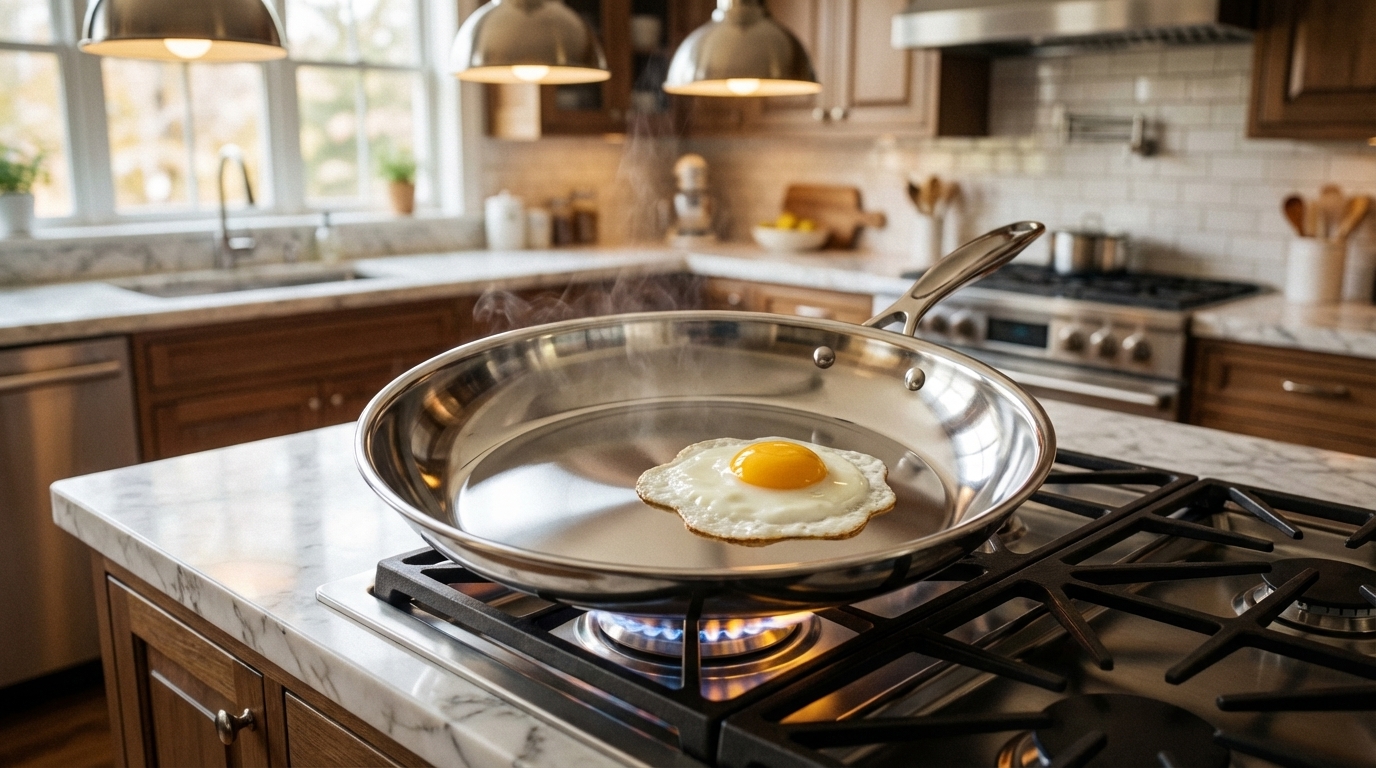
Learn to spot quality PTFE pans and keep them slick for years with simple heat and utensil habits. A well-cared-for Misen nonstick outlasts ceramics, saving money and landfill space while eggs keep sliding.
Understanding PTFE Coating: Chemistry, Myths, and Modern Formulations
PTFE's super-slick, carbon-and-fluorine surface lets eggs glide off your PFOA-free pan because food literally can't grab onto the same coating even geckos can't climb.
The science behind PTFE: how the polymer creates a non‑stick surface
PTFE is a polymer built entirely from carbon and fluorine atoms, and that bond creates the non-stick effect you rely on every morning.
The fluorine atoms form such strong bonds with carbon that food molecules simply can't stick to them -- no matter how hard you try to burn that omelet. [2] To put this slipperiness in perspective: PTFE is the only known surface that geckos can't climb, because even their specialized feet can't grip it. [2] With a friction coefficient between 0.05 and 0.10, PTFE ranks among the slipperiest solids scientists have measured -- which explains why your eggs slide right off the pan. [1]
Common label claims decoded: what "PTFE coating" really means today
When you see 'PTFE coating' on a pan label, that simply identifies what makes the surface nonstick.
The label you should actually look for is 'PFOA-free.' PFOA was a chemical once used during manufacturing to help PTFE stick to pans -- think of it as construction glue that wasn't part of the final coating. [3] After environmental concerns emerged, manufacturers eliminated PFOA by 2015, which is why you'll see 'PFOA-free' on virtually every nonstick pan today, including our nonstick cookware. [3] Many cooks confuse these two chemicals, but only PFOA raised health concerns.
PTFE itself remains chemically stable at normal cooking temperatures -- it's the coating that makes your pan work, not the problem chemical from old manufacturing methods. [3]
Real‑World Performance in Everyday Cooking
Keep your PTFE pan below 500 degreesF, skip metal utensils and the dishwasher, and you'll glide from flawless omelets to effortless fish fillets every night without extra oil or stuck-on mess.
Heat tolerance, stick resistance, and flavor preservation from steaming broccoli to searing steak
PTFE's low-friction surface keeps delicate proteins like eggs and fish intact across everyday cooking tasks -- from steaming vegetables to sautéing aromatics -- because food cannot bond to the fluorinated coating regardless of moisture level. [4] Where performance narrows is above 500 degreesF, the threshold at which the coating begins releasing fumes, making sustained high-heat searing the one task PTFE handles poorly. [5] Cooking at medium heat with minimal added fat also preserves natural ingredient flavor, since the pan releases food cleanly without the residue that builds up on uncoated surfaces. [4] For most home cooking tasks, including braising, pan sauces, and omelets, PTFE delivers consistent release without requiring technique adjustments or extra oil. [5]
Practical care routine: cleaning, utensils, and maintenance that keep PTFE coating effective
PTFE coatings last longest when three habits stay consistent: hand-washing with warm water and mild dish soap, using silicone or wooden utensils instead of metal, and avoiding storage arrangements where bare pans stack directly against each other. Abrasive pads and dishwasher cycles degrade the coating over time by creating micro-scratches that reduce release performance and accelerate wear.
Metal utensils cause the same damage more quickly -- even brief contact can score the surface. Placing a soft cloth, paper towel, or pan protector between stacked pans prevents the surface contact that chips or scratches the coating during storage.
Safety, Health, and Environmental Considerations
Make your next non-stick pan a long-lasting PTFE one--treated right, it keeps one pan out of the landfill for ten-plus years while short-lived ceramics pile up three to four deep.
Longevity and sustainability: extending pan life to reduce waste and landfill impact
PTFE doesn't break down naturally in landfills, which makes the lifespan of your cookware the most important environmental factor. [6] While recycling programs exist that can separate coatings from metal pan bodies, most consumers don't have access to these specialized facilities. The result: discarded nonstick pans typically end up in landfills where they remain for centuries.
Ceramic nonstick coatings might seem like the greener choice, but they typically lose their release properties within three years, requiring frequent replacements. [5] A PTFE pan maintained with the care routine described earlier can perform reliably for a decade or more -- that's one pan instead of three or four ceramic replacements headed to the landfill. Quality construction matters too: our nonstick pan features a multi-layer PTFE system designed to maintain release performance year after year, reducing the cycle of buying and discarding cheaper alternatives.
Choosing and Caring for Quality PTFE Cookware
Choose multi-layer PTFE cookware, treat it gently--medium-low heat, no spray oils, baking-soda scrubs, and an occasional oil-seasoning--and its buttery-smooth surface will keep releasing perfect eggs for hundreds of meals.
Key indicators of a durable PTFE coating on Misen cookware
Look for multi-layer construction when evaluating PTFE cookware -- two- or three-coat systems deliver better adhesion and wear resistance than single layers, especially in long-term abrasion tests. [7] Quality PTFE feels distinctly slick and slightly buttery to the touch, with a higher gloss finish than cheaper alternatives -- signs of proper formulation and application. [8] The dry-egg test remains the industry standard: cook a single egg without oil and rate the release on a 1-to-5 scale.
Coatings that score consistently high hold up across hundreds of uses, while lower-scoring ones start sticking within months. [7] Our nonstick pan uses this same multi-coat PTFE system, engineered for reliable release performance meal after meal.
Everyday maintenance tips to maximize lifespan and performance
Beyond the basic care habits covered in Real-World Performance, these advanced techniques extend coating life even further.
Start heating on medium-low -- pans reach coating-damaging temperatures within minutes on high heat, but gradual warming preserves the surface through hundreds of cooking cycles. [11] Skip aerosol sprays completely; the lecithin creates stubborn buildup that demands aggressive scrubbing. [10] For occasional deep cleaning, mix equal parts baking soda and water into a paste, let it sit 10-15 minutes, then rinse -- this removes residue without scratching. [9] If your pan loses some release despite looking intact, restore performance by coating with vegetable oil and heating on low for five minutes.
The oil fills microscopic surface imperfections, bringing back that original slickness. [10]
- PTFE is safe; PFOA (removed by 2015) was the health concern, not PTFE itself.
- PTFE pans degrade above 500 degreesF; avoid sustained high-heat searing.
- Hand-wash with mild soap, use silicone/wood tools, and stack with protectors to extend life.
- Multi-layer PTFE coatings outlast single layers; gloss and slick feel signal quality.
- One durable PTFE pan beats replacing ceramic nonstick every few years, cutting landfill waste.
- https://en.wikipedia.org/wiki/Polytetrafluoroethylene
- https://www.compoundchem.com/2016/02/04/teflon/
- https://www.chancescook.com/pfoa-vs-ptfe-in-cookware-key-differences-explained/
- https://www.sensarte.com/blogs/all/the-science-behind-nonstick-coatings-understanding-teflon-ceramic-and-other-materials
- https://foodprint.org/blog/what-to-know-about-nonstick-cookware/
- https://www.sensarte.com/blogs/all/a-look-at-the-environmental-and-sustainability-effects-of-nonstick-cookware
- https://www.ppg.com/en-US/industrialcoatings/industrial-blog/non-stick-coatings-performance
- https://effium.com/blogs/news/short-guide-to-nonstick-coatings-teflon-pfas-or-ceramic?srsltid=AfmBOorfDWAYgWVRe2L8FqW86s4xqMk2PhFYWMY0vvynrRfuJAanSNVb
- https://www.marthastewart.com/how-to-clean-a-nonstick-pan-8722912
- https://www.dioro.com/blogs/news/cooking-with-non-stick-cookware-complete-guide?srsltid=AfmBOopsPUIti7urQ_ZvW92wemihGnxPknP-faTt5RCUokn_mg6R_aIl
- https://gourmetkitchenworks.com/blogs/recipes/essential-guide-proper-use-and-storage-of-non-stick-pans-for-longevity