

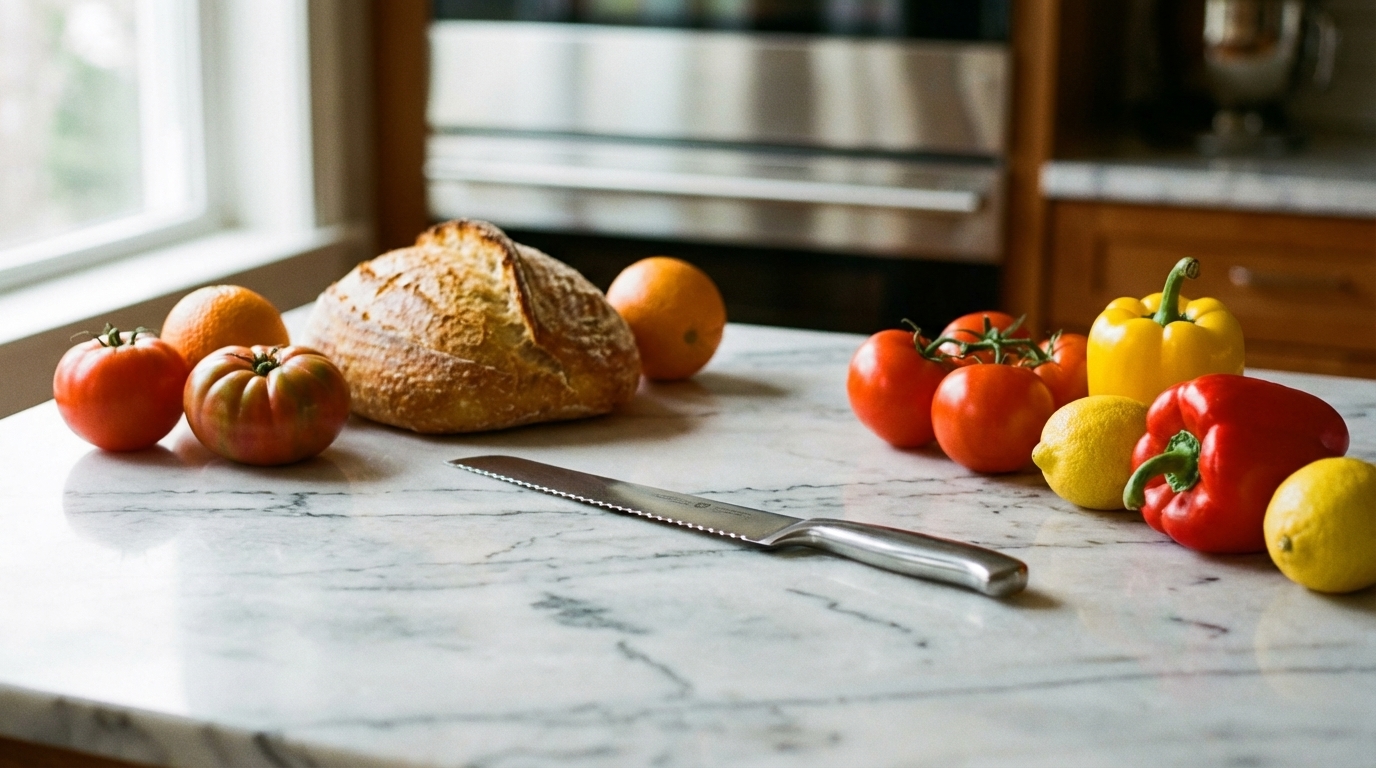
A serrated knife's teeth grip tough skins and crusts without crushing the soft interior, so you can glide through tomatoes, citrus, pastries and squash with light sawing strokes. Pick a mid-length, high-carbon blade, store it spine-first on a magnet, and it will stay keen and safe for years of low-effort slicing.
Why Every Kitchen Needs a Serrated Knife
Grab a serrated knife and you'll glide through crusty bread, ripe tomatoes and even rock-hard squash without crushing the delicate goodness inside.
How the serrated edge cuts through crusts, skins, and tough fibers
Serrated edges work differently from straight blades. Each tooth acts as an individual cutting point, gripping and piercing the surface independently.
This design excels on foods with tough exteriors -- crusty bread, tomato skins, citrus rinds, fibrous vegetable stems -- without requiring the downward pressure that crushes delicate interiors. Try cutting a ripe tomato with a straight blade: you need enough force to break the skin that the fruit often collapses before the blade even starts cutting.
A serrated knife's sawing motion spreads that force across multiple teeth, letting you slice cleanly with minimal pressure.
Beyond bread: everyday foods that benefit from a serrated knife
Tomatoes get all the attention, but your serrated knife handles much more. Pineapple, citrus, kiwi, melon, bell peppers -- any produce with tough or slippery skin that makes a straight blade slip and slide.
Those dense broccoli and cauliflower stems that splinter when you try to chop them? They cut cleanly with a serrated blade's sawing motion.
Delicate cakes and flaky pastries keep their shape because the teeth slice through without compressing. Bagels, crusty rolls, even rock-hard butternut squash -- if it has a tough exterior protecting something softer inside, reach for the serrated knife instead of muscling through with your chef's knife.

Choosing the Right Serrated Knife for Home Cooking
Pick a 10-inch, high-carbon stainless, medium-tooth, full-tang serrated knife and you'll glide from crusty sourdough to ripe tomatoes without ever stopping to reposition, sharpen, or fight the handle.
Blade length, tooth pattern, and handle ergonomics for versatile use
Blade length determines how much cutting you accomplish in a single stroke. A 10-inch blade cuts through large loaves without repositioning, while an 8-inch blade gives you better control and maneuverability in tight spaces. Our 10-inch serrated knife splits the difference -- long enough for efficient slicing but still manageable for detail work.
Tooth pattern affects how cleanly you cut. Fine, closely spaced teeth create cleaner cuts through delicate items with less tearing. Wider teeth grip and saw through tougher surfaces more aggressively.
Medium-spaced teeth handle both jobs reasonably well, which is why they're the practical choice for most kitchens. Handle design impacts control during the sawing motion. A full-tang construction with a forward bolster keeps your hand positioned properly through both push and pull strokes, reducing fatigue during extended prep sessions.
Material choices that balance durability, performance, and price
Steel composition determines how long your knife stays sharp. High-carbon stainless steel offers the best balance -- it resists rust and holds an edge through regular use without being brittle. This is what you'll find in quality mid-range knives.
German-style steels (typically 56-58 HRC) are softer and more forgiving if you accidentally twist the blade or hit a bone. Japanese-style steels (60+ HRC) stay sharp longer but need more careful handling to avoid chips. For serrated knives, the German approach makes more sense -- the teeth do the cutting work, so extreme hardness isn't necessary.
Skip the budget options with soft stainless alloys. They dull quickly, and unlike straight-edge knives, serrated blades are difficult to sharpen at home. Investing in quality high-carbon stainless steel means your serrated knife performs reliably for years.
Mastering Techniques with Your Serrated Knife
Grip your serrated knife lightly, saw at a 20-degree angle, and sequence tomatoes-citrus-peppers in one fluid prep line to turn a single blade into a fast, flavor-safe powerhouse.
Integrating the serrated knife into prep workflows for speed and less waste
The right technique transforms a serrated knife from a bread slicer into a versatile prep tool. Start with proper grip -- hold the knife handle firmly but relaxed, with your index finger resting on the spine just past the bolster for control. Use a gentle sawing motion, letting the teeth do the work rather than forcing downward pressure.
Keep the blade at a slight angle (about 20-30 degrees) to the cutting board, which helps the teeth catch and grip without tearing. For maximum efficiency, group similar tasks together in your prep workflow. A 10-inch serrated knife can handle an entire prep session of mixed produce without switching tools -- slice tomatoes first while the board is dry, then move to citrus, and finish with fibrous items like bell peppers or pineapple.
This sequencing prevents flavors from transferring and reduces cleanup between cuts.[1] The consistent sawing motion across different textures also helps you develop muscle memory for smoother, faster cuts.


Caring for Your Serrated Knife to Keep It Performing
Protect your serrated knife's bite by storing it spine-first on a magnetic strip or in a soft-lined slot so those tiny teeth never touch metal.
Storage solutions that keep the blade safe and ready for daily use
Serrated knives need storage that protects those teeth from contacting other metal surfaces -- blade-to-blade contact or bumping against loose utensils dulls the edge faster than months of actual cutting.
You've got four practical options for keeping your serrated knife sharp and accessible: a countertop knife block with slots sized to your blade length, a drawer insert with soft-lined individual slots, a wall-mounted magnetic strip, or individual blade guards for knives stored in mixed drawers.[3] When using a magnetic strip, position the spine -- not the edge -- against the magnet.
This prevents those tiny teeth from developing micro-abrasions that compromise their cutting ability.[3] Tossing an unprotected knife in a standard drawer doesn't just dull the blade through random contact -- you're also creating a safety hazard every time you reach in for another tool.[3]
- Serrated teeth grip and pierce independently, cutting tough exteriors without crushing soft interiors
- Use a gentle 20-30 degrees sawing motion, letting the teeth work instead of forcing downward pressure
- High-carbon stainless steel with German-style hardness (56-58 HRC) balances edge retention and durability
- Store serrated knives in blocks, drawer inserts, or spine-first on magnetic strips to protect delicate teeth
- Group prep tasks--dry to wet/fibrous--to avoid flavor transfer and build efficient cutting rhythm
- Serrated blades excel on tomatoes, citrus rinds, pineapple, broccoli stems, pastries, and squash
- Medium-spaced teeth offer the best versatility for most home-kitchen cutting needs