

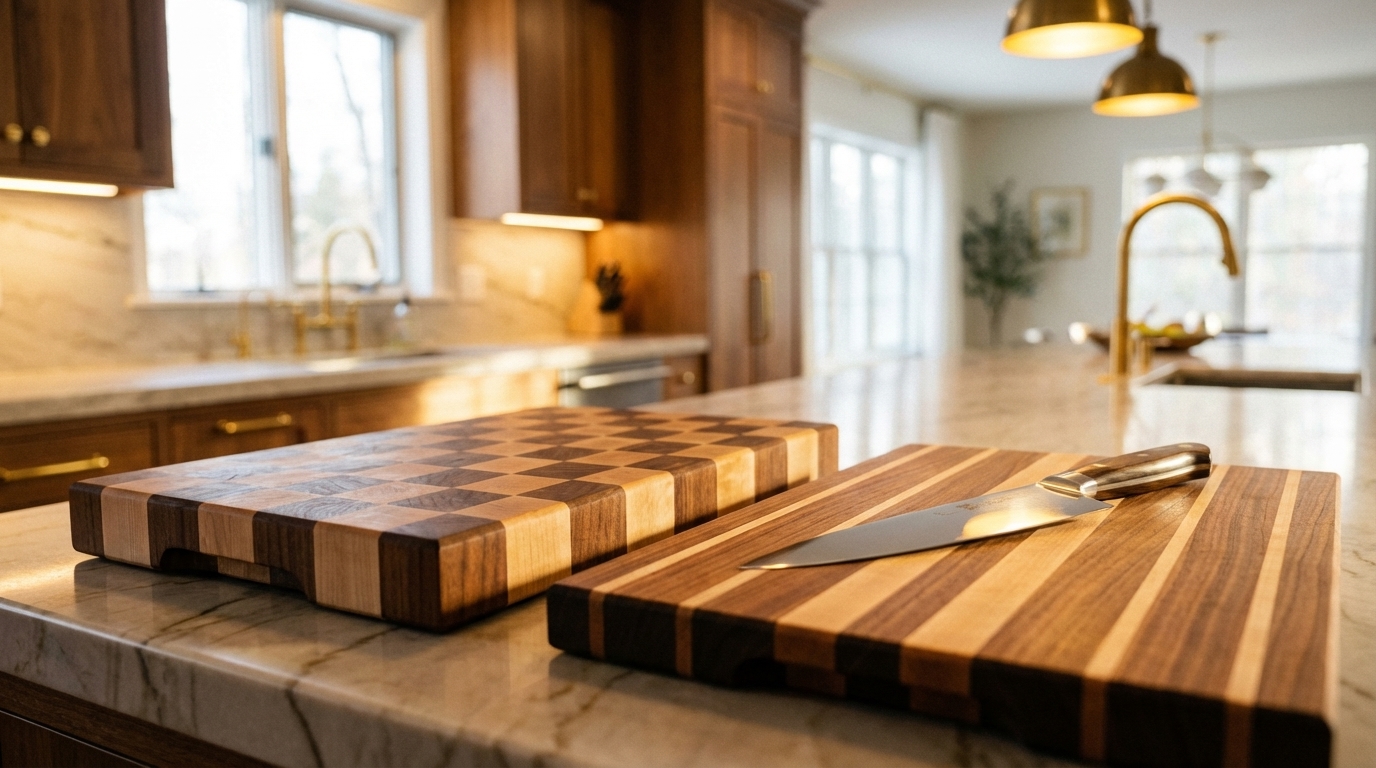
End-grain boards act like a bed of straws that let knife edges slip between vertical fibers, dramatically reducing blade wear and offering natural bacteria-killing absorption, but they demand disciplined oiling and can warp if neglected, while edge-grain boards trade that self-healing magic for rock-solid, low-maintenance durability that shows scratches sooner yet can be sanded back to new for decades. The article arms cooks with the science behind those differences, spells out cleaning, oiling, and resurfacing routines that extend any board's life, and shows how to match size, wood species, and construction quality to budget and cooking style--whether that means investing in a hefty maple end-grain station for daily slicing and pairing it with a lighter edge-grain board for messy barbecue prep, or choosing a mid-priced domestic maple edge-grain workhorse that balances knife care, longevity, and value without the premium price tag.
Understanding Grain Types
Flip a board on its end and you'll see a checkerboard of growth rings that lets knife blades slip between upright fibers and magically close the wounds, while turning it on its edge gives the straight-lined workhorse that most kitchens rely on.
What is End‑Grain Construction?
?End-grain boards start with wood cut into strips, each piece rotated a quarter turn so the cut ends face up. [3] You'll recognize them by their signature checkerboard pattern--those are the wood's growth rings showing on the surface. [1] Here's what makes them unique: the wood fibers stand vertical, like a bundle of drinking straws.
When you cut, your knife slides between those fibers instead of slicing through them.
Lift the knife, and those fibers close back up. [2] It's this simple mechanism that gives end-grain boards their famous durability--we'll explore exactly how this protects your knives in the next section. [1]
What is Edge‑Grain Construction?
?Edge-grain boards are the workhorses of most kitchens.
They're made by cutting hardwood into long strips, standing each piece on its narrow edge, then gluing them together. [4] That gives you those clean, straight lines running the length of the board--the classic
How Grain Affects Knife Performance
Switch to an end-grain board and your knives stay razor-sharp far longer because the wood fibers part instead of scraping metal off the edge, while also hiding bacteria away to die naturally--something no edge-grain board can match.
Knife Impact on End‑Grain Boards
Because end-grain fibers part for a blade rather than resist it, the microscopic geometry of your knife's edge stays intact significantly longer than on any other cutting surface.
Every pass across edge-grain, glass, or ceramic shaves tiny amounts of metal from a blade's bevel--end-grain's fiber-parting mechanism eliminates most of that abrasion. [6] Professional kitchens processing hundreds of pounds of food daily invest in end-grain boards specifically to cut sharpening frequency, and the logic applies just as well at home: a sharper knife needs less force behind it, which means greater control and lower slip risk during use. [6] End-grain also draws food juices and bacteria into the board's interior through those same vertical xylem vessels--once inside, bacteria die within days from lack of moisture, a natural food-safety benefit that no edge-grain board can replicate due to its horizontal fiber orientation. [7]
Knife Impact on Edge‑Grain Boards
Because edge-grain fibers run parallel to the cutting surface, every knife stroke cuts across them rather than parting them--creating friction and microscopic abrasion that progressively dulls a blade's edge. [6] For home cooks preparing daily meals (rather than commercial volumes), this tradeoff is manageable; the dulling effect is gradual enough that most cooks won't notice it unless they're working with high-end knives they keep razor-sharp. [6] Edge-grain also presents a slightly harder surface than end-grain, which contributes to that increased resistance against the blade. [8] The practical consequence shows up over time: knife marks accumulate visibly on the surface, eventually creating grooves that require sanding to restore a clean cutting plane--a maintenance step end-grain boards largely avoid. [6]
Real‑World Durability and Maintenance
End-grain boards reward meticulous oiling with heirloom longevity, while edge-grain boards forgive skipped maintenance at the price of losing self-healing magic--so wash both sides by hand, dry on edge, and oil with mineral oil to decide which trade-off you'll live with.
Longevity and Self‑Healing Properties
As we've seen with knife impact, the way boards age follows directly from their grain orientation. End-grain boards bring impressive longevity--their 2 to 3-inch thickness provides substantial material for resurfacing, and they develop character over generations rather than wearing out. [6] But here's the catch: those exposed fiber ends act like straws for moisture.
Skip your oiling routine, and that moisture cycling will stress glue joints until you're dealing with cupping, cracking, or boards literally coming apart. [9] Edge-grain boards flip the script entirely. They give up that self-healing surface (discussed in the knife performance section) but gain rock-solid structural stability.
Their tighter grain resists moisture absorption by 25%, making them the workhorse option for busy kitchens where maintenance might slip. [9] While they'll show their age through surface wear, a quick sanding brings them back to new--and you can do this repeatedly without worrying about the board falling apart. [6] It's the difference between high-maintenance perfection and dependable daily use.
Cleaning, Oiling, and Care Tips for the best wood cutting boards
Cleaning your boardHow you clean your board matters more than how often. Always hand-wash with hot, soapy water--dishwashers are board killers, forcing moisture in unevenly and warping wood that should last decades. Here's the key: wash both sides, even if you only used one. Uneven drying is what causes cupping. After rinsing, towel-dry thoroughly and stand the board on edge so air hits all sides. [10] Got garlic or onion funk? Make a paste with kosher salt and lemon juice, scrub it in with the cut lemon, let it dry completely, then scrape it off.
Works every time. [10] For boards that see heavy daily use, like ### Oiling and conditioningThink of wood like your skin--it dries out and needs moisture to stay healthy. Stick with food-safe mineral oil (never olive or vegetable oil, which go rancid). [10] New board? Hit it hard at first: oil every few days for a week, then weekly for a month, then monthly after that. The water test tells you when to oil: sprinkle a few drops on the surface. If they bead up, you're good. If they soak in or spread out, oil that board today. [10] After the oil soaks in overnight, wipe the excess and apply a thin coat of beeswax or board cream for extra protection.
Pro tip: warm the wax slightly first--it penetrates deeper into the wood. [10]### Restoring a worn surfaceDon't toss a scarred board--sand it back to life. Start with 100-grit sandpaper for moderate wear, 80 for deep gouges, and work up to 220 or finer. Why finer grits matter: they create smaller micro-grooves where bacteria can't hide. [10] Sand both sides equally, even if only one looks beat up. This keeps the board flat as it dries. Once you're done, dust it off completely and immediately oil and wax the whole board--those freshly opened wood fibers are thirsty. [10] A properly maintained board can handle this treatment multiple times over its lifetime.
Choosing the Right Board for Your Kitchen
Skip the premium end-grain hype and grab a $50-$80 domestic maple edge-grain board--then match its size and wood to your real cooking tasks so you get pro-level performance without the gouged budget or dull knives.
Budget‑Friendly Options without Compromise
The price gap between grain types is real--end-grain boards typically cost $70 to $300, while quality edge-grain options run $30 to $200. [11] But here's what actually matters: the craftsmanship behind the price tag. Budget end-grain boards often cut corners in ways that undermine their benefits.
Many use acacia wood, which varies wildly in hardness across its nearly 1,000 species--some varieties are harder than maple and can dull your knives faster than a quality edge-grain board would. [12] Watch for other red flags: rough finishing, stick-on feet that peel off, and minimal warranties that suggest the manufacturer doesn't trust their own product. [12] For home cooks seeking genuine performance without the premium price, consider a domestic maple edge-grain board in the $50-$80 range. You'll get slightly more blade wear over time, but the trade-offs make sense: better construction, reliable wood sourcing, and boards that last. [11] Since even the best knives need regular maintenance, pairing your board choice with a professional
Matching Board Size and Wood to Your Cooking Style
Wood choice affects more than just appearance. Maple sets the standard--dense, tight-grained, and reliable. Walnut runs slightly softer, treating knife edges more gently while looking good enough to leave out during dinner parties.
Cherry lands between them in hardness and develops a rich patina with use. But matching boards to tasks matters more than wood species alone. Edge-grain boards excel at handling serrated knives and messy barbecue prep--tasks that would stress an end-grain board's glue joints and negate its self-healing properties. [13] Save your end-grain investment for straight-edge knife work where it truly shines.
Size decisions come down to how you actually cook. A 16" x 22" board gives you room to break down a whole chicken or prep multiple vegetables without cramming. [13] Just know what you're signing up for: end-grain boards this size weigh 15 to 30 pounds--stable for aggressive chopping but impractical for daily storage shuffling. [6] Edge-grain alternatives in the same footprint run 5 to 15 pounds, making them easier to grab for quick tasks. [6] The smartest setup for serious home cooks? One large end-grain board as your permanent prep station, plus a smaller edge-grain board for raw meat, garlic, or any task you want to isolate. [6] This approach concentrates the knife-preservation benefits where they count while keeping maintenance manageable--your workhorse end-grain board stays put and properly maintained, while the lighter edge-grain handles the messy jobs.
Conclusion
- End-grain boards part wood fibers to preserve knife edges and self-heal, but need monthly oiling to avoid cracking.
- Edge-grain boards dull knives faster yet resist moisture and are lighter for daily use.
- Always hand-wash both sides, towel-dry, and stand boards on edge to prevent cupping.
- Oil new boards weekly for a month, then monthly; water beading shows adequate protection.
- Pair a large, heavy end-grain station with a smaller edge-grain board for raw meat and messy jobs.
- Budget edge-grain maple at $50-80 outperforms cheap end-grain that may use inconsistent acacia.
- Serrated knives and barbecue prep belong on edge-grain to spare end-grain glue joints.
- https://www.skottsberg.com/en/knowledge-center/serving-cutting-boards/end-grain-wood/
- https://opeyall.com/pages/the-benefits-of-end-grain-construction
- https://www.klingspor.com/blog/woodworking-2/how-to-make-an-end-grain-wooden-cutting-board-2
- https://theknottylumberco.ca/blogs/hardwoods-101/end-grain-vs-edge-grain?srsltid=AfmBOorRkUabPJGTZnI_m4T50BdIikUVUnuTxWEnHaW9qBHAe4y7pCGR
- https://www.instructables.com/Edge-Grain-Butcher-Block-a-DIY-Tutorial/
- https://www.bcknife.com/blogs/news/end-grain-vs-edge-grain-cutting-boards-which-is-be/
- https://theboardsmith.com/blogs/wisdom-behind-the-wood/wisdom-behind-the-wood-8-end-grain-vs-edge-grain?srsltid=AfmBOoqkMq9mV_wkJr6PWD24Ini8CFoO0ckcX2kuQde_MrRBBj33wxbO
- https://theprodigalcarpenter.net/pages/end-grain-cutting-board-use-and-maintenance
- https://theknottylumberco.ca/blogs/hardwoods-101/end-grain-vs-edge-grain?srsltid=AfmBOoq2X2Cq3weLHSmT7dOhkdZFA6dpurC015vOASwdsWDTn98cJSIK
- https://www.nytimes.com/wirecutter/guides/how-to-clean-wood-cutting-boards/
- https://kitchepicks.com/end-grain-vs-edge-grain-cutting-board-guide/
- https://www.nytimes.com/wirecutter/reviews/best-cutting-board/
- https://theboardsmith.com/blogs/wisdom-behind-the-wood/wisdom-behind-the-wood-8-end-grain-vs-edge-grain?srsltid=AfmBOor-CtUPv0-W5lDr37iVEe_Tf4HOxHNxDP8B6flDHsOD2chHz5z4