

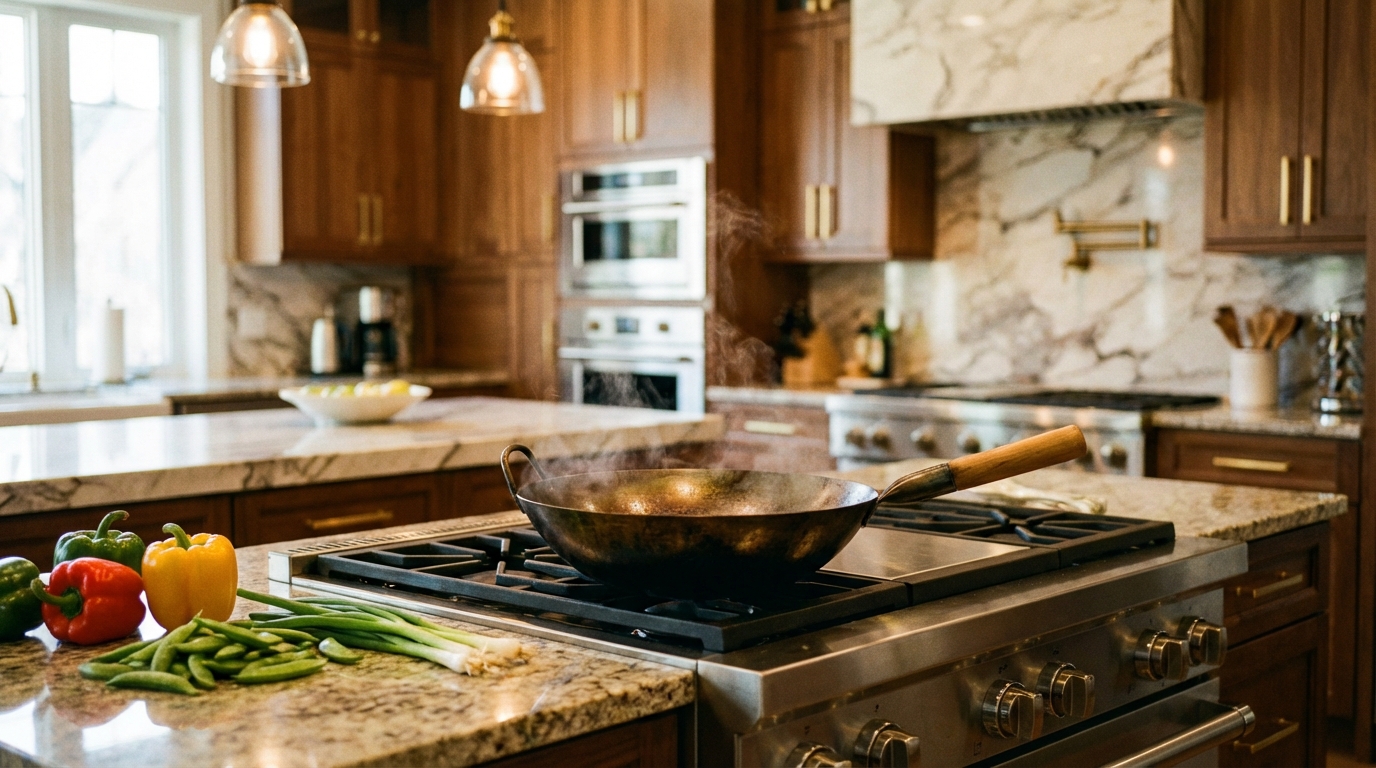
The article champions the carbon-steel wok as the ultimate non-toxic, high-heat tool for stir-frying, showing readers how its natural, PTFE-free surface delivers restaurant-level sear without off-gassing or chipping. It walks home cooks through the wok's design hallmarks--fast, even heating on a gas burner, feather-light heft for one-hand tossing, and a hand-hammered bowl that outlives non-stick pans--while demystifying the seasoning ritual that builds an ever-slick, rust-proof patina. Practical, planet-minded advice on cleaning with hot water and a bamboo brush, drying over flame, and re-oiling after each use demonstrates how a five-minute care routine can turn an inexpensive piece of bare metal into a decades-long kitchen workhorse. The buying guide decodes wall thickness, handle styles, and factory coatings so shoppers avoid gimmicks and choose woks that are responsibly forged, shipped without plastics, and sized for their stovetop, reinforcing that sustainable cooking starts with gear you'll actually keep in daily rotation.
Why a Non‑Toxic Carbon Steel Wok Is the Smart Choice
Ditch the toxic coatings--seasoned carbon steel blazes past 500 degreesF, giving you safe, natural nonstick performance and the searing heat that locks in stir-fry flavor without the PTFE fumes or forever chemicals.
Health‑first benefits of a non toxic carbon steel wok
When you're stir-frying, you need heat--and lots of it. We're talking temperatures that exceed 500 degreesF, which is exactly where traditional nonstick cookware starts to fail you.
PTFE coatings (the chemical behind that slick surface) begin breaking down at these temperatures, releasing fumes linked to polymer fume fever in humans and fatal toxicity in birds. [1] The broader PFAS chemical family that includes PTFE has been connected to thyroid disorders, cardiovascular disease, reduced fertility, and cancer. [2] Carbon steel takes a completely different approach. With its simple composition--roughly 99% iron and 1% carbon--you get cookware free from synthetic coatings and forever chemicals. [1] Here's what makes it special: at high heat, carbon steel doesn't degrade--it actually gets better.
Any iron that releases into your food stays at safe levels and can even benefit those with low iron intake. [2] Once you've built up that seasoned surface (covered in detail later), you'll have natural nonstick performance from polymerized oil instead of chemical coatings--all the convenience, none of the compromises.
Performance edge for high‑heat stir‑fry cooking
The performance case for carbon steel starts with how it handles heat. Carbon steel heats fast and bounces back quickly when you toss in cold ingredients--exactly what you need for proper stir-fry.
This rapid, high-temperature cooking triggers caramelization that creates those deep, complex flavors you're after. [3] Without enough heat, your vegetables will steam instead of sear, and proteins will stew rather than develop that perfect crust--basically the opposite of what all that constant stirring over blazing heat is supposed to achieve. [3] While stainless steel distributes heat evenly, it can't match carbon steel's naturally developing nonstick surface at high temperatures. Your

Design Features That Deliver Everyday Durability
A 1.8-2 mm hand-hammered carbon-steel wok with a long Northern-style handle gives you restaurant-level heat control and everyday durability for about $35--no need to pay triple for flashy looks.
Affordable, thick‑gauge carbon steel construction
When you're shopping for a wok that'll last, gauge thickness tells you everything about real-world performance. Hand-hammered carbon steel resists warping at high heat where machine-pressed alternatives often fail. [5] This matters more than you might think--a warped wok creates hot spots that turn your stir-fry into a steaming session, defeating the whole purpose of high-heat cooking.
The sweet spot for thickness sits at 1.8-2mm: heavy enough to hold steady heat when you add cold ingredients, but light enough to stay responsive and easy to handle. [5] Here's the good news about pricing: you don't need to break the bank. Quality woks start around $31-$40, and testing shows no real performance difference between these and models costing three times more--you're paying for looks, not better cooking. [6] One detail worth noting: black carbon steel heats up faster than raw carbon steel, helping you achieve that restaurant-quality wok hei even on a home burner. [6]
User‑friendly shape and handle for daily use
The right shape and handle can make or break your wok cooking experience.
Northern Chinese-style "pow" woks work better for home kitchens than Cantonese-style versions--their long handle feels familiar if you're used to Western skillets and keeps your hand safely away from the heat. [7]
Seasoning, Maintenance, and Longevity Tips
Season your carbon-steel wok once--burnish it with a whisper-thin layer of oil, turbo-charge the patina by charring scallions, and you'll unlock a forgiving, nonstick armor that only needs a quick rinse, salt scrub, and a final flash of heat to outlive every other pan in your kitchen.
Step‑by‑step seasoning to build a natural non‑stick surface
Think of seasoning as giving your wok its protective armor. The process fills microscopic pores in the steel with polymerized oil, creating that naturally nonstick surface we discussed earlier. [10] Start by removing the factory coating. Scrub your new wok with hot soapy water and an abrasive pad, then dry completely with paper towels. [9] Don't worry about the black residue you'll see--that's just the protective coating doing its job during shipping. Next, heat the clean wok until the metal turns blue. [9] This color change shows the steel is ready for seasoning.
Give it another quick wash and dry, then warm it over medium heat to evaporate any moisture. Now for the actual seasoning: While the wok is warm (not smoking), coat the interior with oil and wipe it down hard with fresh paper towels. [9] You want the thinnest possible layer--think moisturizer, not sunscreen. Heat until lightly smoking on the stovetop, or pop it in an oven set 50-100 degreesF above your oil's smoke point for an hour. [9] Here's the pro move: lock in that seasoning by charring aromatics. Heat your freshly seasoned wok until smoking, add a tablespoon of oil, then stir-fry chopped scallions or garlic until blackened. [9] This step turbocharges your patina development.
Made a mistake? No problem--just scrub, re-oil, and try again. [9] Unlike finicky nonstick coatings, carbon steel forgives and forgets.
Practical care routine that keeps your wok non-toxic for years
Good news: maintaining your seasoned wok takes less effort than caring for nonstick cookware. After a few weeks, these steps become second nature. Post-cooking cleanup is simple. Rinse with hot water and scrub with a stiff nylon or bamboo brush.
Yes, you can use soap--modern dish soap won't harm a well-seasoned surface. [11] For stubborn bits, sprinkle salt with a dash of oil and scrub gently. The salt lifts residue without scratching your hard-earned patina. [11] Here's the critical part: always dry thoroughly with a towel, then heat the wok on your stovetop to evaporate any hidden moisture. [11] Finish by wiping on a whisper-thin coat of oil. Skip this step and rust will find you--even overnight storage of a damp wok can start corrosion. If rust spots appear (it happens), don't panic.
Scrub with salt and oil, re-season that spot, and you're back in business. [12] Just keep your wok out of the dishwasher--it's kryptonite for seasoning. [12] The beauty of carbon steel? Every meal makes it better. Minor scratches and wear spots heal themselves through regular cooking. Unlike synthetic coatings that degrade over time, your wok's natural, chemical-free surface actually becomes more resilient with use. [11] For an extra boost, consider


Buying Guide & Sustainable Cooking Practices
Choose carbon steel, maintain it with simple habits like hand-washing and re-oiling, and you'll own the last wok you'll ever need--outliving stacks of disposable pans while leaving the lightest footprint on the planet.
Key criteria to select a safe, lasting wok
When you're ready to buy, focus on what actually matters. As we've covered earlier, material safety and construction quality are your starting points--but beyond those basics, look for transparency.
Good manufacturers publish their testing results and certifications (think LFGB, SGS, or California Prop 65 compliance). They'll also back their products with meaningful warranties that show they trust what they're selling. [13] Here's what to look for in your research: Check user forums and cooking communities for real-world feedback.
One person's complaint might be a fluke, but patterns tell the truth about performance issues or design flaws. Don't just trust marketing copy--dig into how people actually use their woks day to day. [13] For those shopping for carbon steel specifically,
How proper upkeep reduces waste and protects the planet
The environmental argument for carbon steel comes down to replacement cycles.
Every nonstick pan that wears out gets discarded--typically within three to five years--and triggers another round of manufacturing: raw material extraction, refining, packaging, and shipping, each compounding the cumulative environmental cost. [14] Properly maintained carbon steel sidesteps that cycle entirely, lasting for generations and amortizing its production impact over decades rather than years. [15] Among common cookware materials, cast iron and carbon steel rank as the least environmentally damaging in terms of raw material processing, [14] and carbon steel's lighter gauge means less material per pan than cast iron without sacrificing that generational lifespan. [15] The maintenance habits that keep a wok functional--re-oiling after each wash, addressing rust spots before they spread, keeping it out of the dishwasher--are precisely what defer replacement indefinitely.
Upkeep isn't a chore separate from sustainability; it's the mechanism that makes the environmental case for carbon steel hold.
- Carbon steel woks heat quickly and evenly for authentic stir-fry results.
- Naturally non-toxic material avoids PTFE, PFOA, and synthetic coatings.
- Proper seasoning creates a natural, durable non-stick surface over time.
- Hand-wash and dry immediately to prevent rust and preserve seasoning.
- Choose flat-bottom woks for stability on Western stovetops.
- High-heat cooking shortens cook times and preserves vegetable nutrients.
- A well-maintained carbon steel wok can last for decades of daily use.
- https://thepaleodiet.com/choosing-the-right-non-toxic-cookware/
- https://www.bcpp.org/our-work/tips-for-prevention/safer-cookware-guide/
- https://ecolutionhome.com/a/blog/why-is-a-carbon-steel-wok-the-best-for-stir-fry?srsltid=AfmBOorpwHu6CnBUWBr9eq0giweukgbNzZtgQ2H_etTAEB_Sdto9N7sw
- https://hcookware.kr/en/blogs/news/which-is-best-carbon-steel-vs-stainless-clad-vs-nonstick-frying-pans
- https://www.leafscore.com/eco-friendly-kitchen-products/the-5-best-non-toxic-woks-for-your-green-kitchen/
- https://www.epicurious.com/expert-advice/the-best-wok-for-stir-frying-at-home-article
- https://www.seriouseats.com/best-woks-5218113
- https://www.reddit.com/r/carbonsteel/comments/17y6xbn/feelings_on_the_made_in_carbon_steel_flat_bottom/
- https://www.instructables.com/How-to-Season-a-Carbon-Steel-Wok-The-Best-Way/
- https://gastrotools.com/blogs/guides/carbon-steel-guide-how-to-build-natural-nonstick-seasoning
- https://www.reddit.com/r/AskCulinary/comments/7bgxog/how_do_you_care_for_and_clean_a_carbon_steel_wok/
- https://www.reference.com/business-finance/maintain-carbon-steel-wok-toxin-free-cooking-experience
- https://www.solamexhome.com/how-to-identify-truly-non-toxic-cookware-a-comprehensive-guide.html
- https://stanfordmag.org/contents/sustainable-cookware
- https://www.leafscore.com/eco-friendly-kitchen-products/pros-and-cons-of-carbon-steel-cookware/