

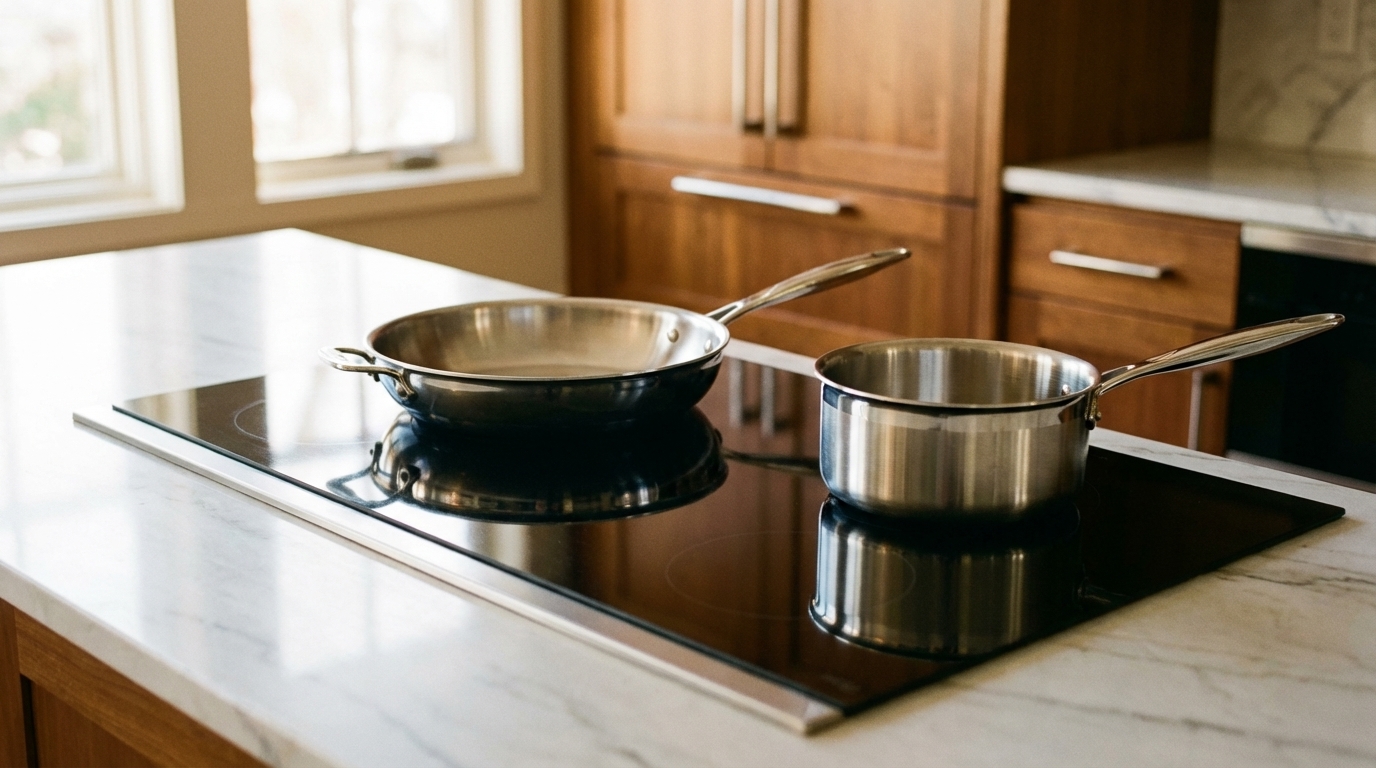
A perfectly flat, smooth-bottomed, right-sized stainless-steel or fully-clad tri-ply pan--not heavy cast iron or soft copper that warps or scratches--protects your glass cooktop from chips and thermal cracks while delivering the even heat you need for everything from searing steak to steaming broccoli. The article walks you through why base flatness, weight, and surface texture matter more than price or brand, how five-ply stainless with an internal aluminum core keeps temperatures within 15-20 degreesF across the cooking surface without rocking or abrading the glass, and how simple habits--wiping the cooktop before residue bakes on, seasoning cast-iron exteriors, sizing the pan to the burner, and storing cookware grit-free--extend the life of both pan and glass. It also clarifies that induction-ready stainless works on every future stove, hard-anodized aluminum gives budget non-stick performance, and you can skip pricey sets if you start with one good 10- to 12-inch tri-ply skillet. Readers will finish knowing exactly what features to test in the store aisles, how to spot warping before it becomes a safety hazard, and how daily five-second wipe-downs eliminate the need for aggressive cleaners that cloud the glass, saving money, meals, and the sleek look of the kitchen's centerpiece.
Choosing the Right Pan for a Glass Cooktop
Choose pans with perfectly flat, smooth bases that match your burner size--like tri-ply stainless steel--to protect your glass cooktop from cracks and scratches while ensuring even cooking.
Understanding Flat, Heavy, and Smooth Surfaces
Glass cooktops need more care than other stovetops -- they scratch and chip more easily, which means your pan's bottom surface becomes critically important. [1] Let's start with what matters most: a perfectly flat base. Warped pans create uneven pressure points that can actually crack the glass, plus they'll leave you with hot spots that burn your food in some areas while barely warming it in others. [1] Copper pans are especially prone to warping over time, making them risky choices for glass surfaces.
Next up is surface texture. Think of rough-bottomed pans -- like stoneware or worn carbon steel -- as sandpaper on your cooktop. [1] Every time you slide or adjust the pan, those rough surfaces scratch away at the glass.
Even cast iron, which many cooks love for its heat retention, poses challenges here. [1] It's not that cast iron can't work on glass -- it's that the combination of its naturally rough texture and substantial weight means one careless move can cause real damage.
Key Features That Define the Best Pans for Glass Cooktop
Beyond surface contact, two practical factors determine whether your pan works well on glass or becomes a constant frustration. First, match your pan size to your burner size.
Using a small pan on a large burner wastes energy and creates hot spots around the edges, while an oversized pan hangs over the heating element, trapping heat where the glass can't properly cool. [2] Both scenarios lead to uneven cooking and potential glass damage from thermal stress. The second factor catches many cooks by surprise: how your pans age matters as much as what they're made of. [2] Pans that warp, discolor, or develop rough patches over time don't just cook poorly -- they become genuine hazards on glass surfaces.
This is where material choice pays off. Well-constructed pans, particularly those with tri-ply stainless steel construction, maintain their flat bases and smooth finishes through years of use, keeping them glass-compatible long after cheaper alternatives have become problems.

Material Matters - Which Metals Perform Best
For glass cooktops, choose fully-clad stainless steel--its warp-proof base protects the glass while the hidden aluminum core delivers fast, even heat from center to rim.
Stainless Steel vs. Aluminum vs. Copper on Glass
Stainless steel is the most practical choice for glass cooktops--not because it conducts heat best, but because it holds its shape.
Its scratch, dent, and warp resistance means the base stays flat through years of high-heat cooking, and its smooth, non-porous surface won't abrade the glass as you reposition the pan. [4] Copper conducts heat faster and more evenly than stainless steel, which sounds like an advantage until you consider that copper is soft--it scratches and tarnishes easily, and it's more prone to warping under repeated heat cycling. [4] A warped copper pan on a glass cooktop creates uneven contact that risks both cracking the surface and cooking food inconsistently.
Aluminum alone doesn't solve this either: pure aluminum and copper pans aren't compatible with induction glass cooktops unless they're built with a magnetized base layer specifically designed for that purpose. [4] Where aluminum earns its place is as a core material inside stainless steel--tri-ply or multi-clad construction uses aluminum's conductivity internally while keeping a stable, glass-safe stainless exterior on both the cooking surface and the base.
How Misen's Construction Balances Weight and Heat Distribution
Misen's 5-ply stainless steel pans land at a practical midpoint between too light and too heavy for glass cooktop use.
At 2.5mm thick throughout, the 12-inch pan weighs around 3.2 pounds--substantial enough to retain heat when cold ingredients hit the surface, but not so heavy that repositioning risks dragging or dropping. [5] The construction method matters more than the weight number alone: five fully-bonded layers run from the base all the way up the sides, with an aluminum alloy core sandwiched between stainless steel on both interior and exterior. [5] This full-clad design distributes heat across the entire cooking surface rather than concentrating it at the burner contact point--in testing, the 12-inch pan holds surface temperature variation to just 15-20 degreesF across its cooking area. [5] The aluminum core responds to burner adjustments within 30-45 seconds, which gives you the control needed to avoid overheating the glass or scorching food. [5] What keeps this construction glass-safe over time is the stainless steel exterior: the base stays flat through repeated heating and cooling cycles with no warping or rocking, meaning consistent, even contact with the glass surface and no pressure points that could stress or scratch it. [5]
Everyday Care and Longevity
Wipe your glass cooktop after every use with warm, soapy water and a soft cloth, tackle sugary spills while they're still warm, and keep pan bottoms clean and smooth--simple daily habits that prevent permanent damage and keep both cooktop and pans performing beautifully for years.
Proper Cleaning Techniques to Preserve the Cooktop and Pan
Glass cooktops clean easily but need the right approach to stay damage-free. Daily maintenance does the most work here: wiping down the surface after each use with warm water, a small amount of dish soap, and a soft cloth keeps residue from baking on and eliminates the need for more aggressive cleaning later. [6] Sugar-based spills--jelly, syrup, candy--need immediate attention.
Once they cool and harden, they bond to the glass permanently. [6] For other spills, timing beats product choice: scrape stuck-on food while the surface is still warm (not hot) using a dedicated cooktop scraper held at a 45-degree angle. [7] This angle lifts food without digging into the glass. For tougher residue, a paste of half a cup of baking soda mixed with three to four tablespoons of water applied for 15-20 minutes gives the cleaner time to break down grease and burnt-on debris before you scrub. [6] Follow with a non-abrasive cooktop cleaner worked in with a soft pad, let it dry to a white haze, then buff off with a dry cloth. [7] Avoid steel wool, abrasive powder cleansers, bleach, rust remover, and ammonia--they'll either scratch the glass directly or degrade its finish over time. [8] The same logic applies to your pans: residue and water left on pan bottoms before heating will leave mineral deposits on the glass that dull the surface and become progressively harder to remove. [6]
Storing and Maintaining Your Pans for Lasting Performance
How you store your pans matters as much as how you use them. For cast iron, season the exterior too--not just the interior.
This builds a smooth layer that protects your glass cooktop. Most cooks skip this step, leaving cast iron bottoms to get rougher over time. [9] Keep pan bottoms clean before storage--gritty particles and crumbs trapped between pan and glass cause most surface scratches. [10] Quality cookware with smooth, stable bases like stainless steel pans stays glass-safe longer when properly maintained.
Your cooktop needs protection when not in use too. Don't treat the glass surface as extra counter space--placing items on it risks scratches and impacts. [11] If you need the space, use a rubber stovetop mat that rolls away quickly when you're ready to cook. [11]


Real-World Kitchen Scenarios
Skip the pricey brands and grab a tri-ply stainless 10-12-inch skillet with a fully clad aluminum core--its flat, warp-proof base protects your glass cooktop, sears steak like a pro, and handles nearly every daily task without emptying your wallet.
From Steaming Broccoli to Searing Steak - Practical Use Cases
Your glass cooktop shapes which pan you'll reach for more than you might expect.
When you're searing a steak or building crust on scallops,
Budget-Friendly Quality: Getting the Best Value Without Compromise
Here's the truth about glass cooktop cookware: the features that protect your cooktop don't have to break your budget. The flat base, stable construction, and warp resistance you need exist across every price point--you just need to know what to look for. Start with construction over brand names.
Tri-ply stainless steel gives you even heating and long-term durability whether you spend $200 or $2000 on a set. [15] Look for fully clad construction where the aluminum core runs all the way up the sides--this design resists warping and works on every cooktop type, including induction if you switch later. For smaller kitchens or couples, an 8-piece set delivers the same performance with fewer pieces taking up cabinet space. [15] On the nonstick front, hard-anodized aluminum pans offer solid value: flat bottoms that won't scratch, reliable release for your eggs and fish, and dishwasher compatibility for easy cleanup. [12] Just note that most aren't induction-ready, which matters if you're thinking about future kitchen upgrades. The real secret?
Focus on what you'll actually use. A quality disc-bottom stainless pan handles 80% of your cooking needs--browning meat, building sauces, sautéing vegetables--at a reasonable price. [12] It's a smart starting point that lets you add specialized pieces as you learn what your cooking style demands. Just make sure any set includes at least one 10 to 12-inch skillet--those tiny 8-inch pans in budget sets mean constant batch cooking for family meals. [15]
- Glass cooktops require perfectly flat pan bases to prevent cracking and ensure even heating
- Tri-ply stainless steel pans resist warping and maintain smooth contact with glass surfaces
- Copper pans are prone to warping and scratching, making them risky for glass cooktops
- Match pan size to burner size to prevent thermal stress and uneven cooking
- Tri-ply construction uses aluminum's conductivity while keeping stainless steel's stability
- Clean spills immediately with non-abrasive methods to prevent permanent glass damage
- Proper pan storage and maintenance extends both cookware and cooktop lifespan
- https://lakeappliancerepair.com/blog/the-best-pans-for-glass-cooktops/
- https://cosmoappliances.com/choosing-the-right-cookware-for-your-cooktop/
- https://eurokera.com/blog/best-pots-and-pans-for-induction-cooktops/
- https://www.debuyer-usa.com/blogs/guides/stainless-steel-vs-copper?srsltid=AfmBOoq7tTUkeiYZJqzGyOvcj_MNVwRX-SYml6wpOTTn-EnutHbDUVLV
- https://kitchenbap.com/misen-5-ply-stainless-steel-cookware-set-review/
- https://www.whirlpool.com/blog/kitchen/how-to-clean-a-glass-electric-stovetop.html
- https://www.kitchenaid.com/pinch-of-help/major-appliances/how-to-clean-an-electric-glass-stove-top.html
- https://www.maytag.com/blog/kitchen/how-to-clean-a-glass-cooktop.html
- https://www.culinarydepotinc.com/blog/how-to-protect-glass-top-stove-from-cast-iron/?srsltid=AfmBOorFY5tQ7jNZWv-7oHib_J5pNE7FMeIwtOleV6kFHPgctjR1D9PU
- https://weiman.com/blog/care-glass-cook-tops?srsltid=AfmBOoq0qhnUSBswovhXzplHpInxSe6Pv-Ovyb05QehWRQZ-jf8t-vr1
- https://www.eastcoastappliance.com/blog/glass-cooktop
- https://www.foodnetwork.com/how-to/packages/shopping/product-reviews/best-pans-for-glass-cooktop
- https://www.thespruceeats.com/best-cookware-for-glass-stoves-4690491
- https://www.debuyer-usa.com/blogs/news/best-carbon-steel-pans-for-glass-cooktop?srsltid=AfmBOoqYI9xtw9ExKRwiru588uL2zynQ3VRnUfPH4ogNXvSJZ6cVnNIs
- https://www.nytimes.com/wirecutter/reviews/best-cookware-set/