

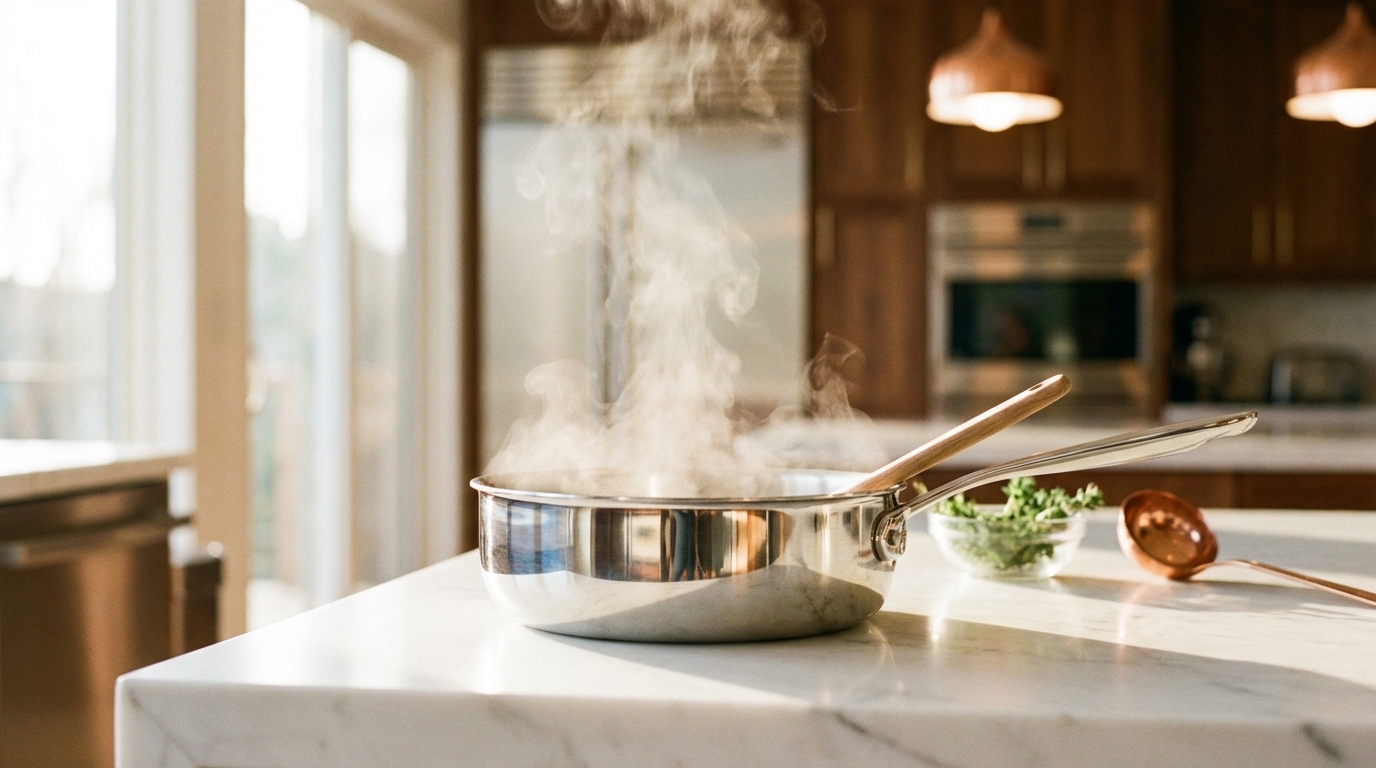
Mastering sauces unlocks the real magic of cooking, and this guide shows you how--from understanding the saucier's pivotal role in professional kitchens to wielding the five mother sauces as your flavor-building toolkit at home. You'll learn why a proper roux, patient reduction, and the five-taste balance turn humble ingredients into silky béchamel, rich demi-glace, or brunch-perfect hollandaise, plus how to rescue a broken emulsified sauce or fix lumpy gravy with kitchen-staple fixes. The article demystifies equipment, too: a 3-5-ply stainless saucier with curved sides and a cool, long handle gives you the precise temperature control needed for everything from quick pan sauces to delicate custards, and a few simple care habits keep it flawless for decades. Whether you're swirling nut-brown butter over pasta, transforming pork-chop fond into a bourbon-pepper pan sauce in five minutes, or blending a five-ingredient cilantro sauce that livens up any weeknight protein, these techniques let you rescue leftovers, create signature flavors, and bring restaurant-level harmony to every plate--proving that great sauces aren't chef secrets, just essential skills every home cook can own.
Understanding the Saucier Role and Its Value
Master the saucier's four pillars--emulsification, fond work, reduction, and temperature control--and you'll instantly transform Tuesday's plain chicken into restaurant-worthy plates while gaining kitchen instincts that elevate every dish you cook.
What a saucier does in modern kitchens
A saucier crafts the sauces that transform good food into memorable dining experiences. In professional kitchens, they're the sauce specialists -- creating everything from classic béchamel and hollandaise to innovative flavor profiles that define a restaurant's menu [1]. The job requires mastering key techniques: emulsification (getting oil and water-based ingredients to play nice), fond development (turning those crispy brown bits into liquid gold), reduction (concentrating flavors through evaporation), and precise temperature control [2].
But sauciers do more than just make sauces. They typically run the sauté station, preparing hot appetizers, soups, stews, and sautéed proteins [1]. They're also responsible for glazes, marinades, and ensuring every sauce hits the plate with perfect taste and texture [3].
In high-end restaurants, the saucier sits right below the executive and sous chefs in the kitchen hierarchy. In more casual spots, sauce duties get spread across different stations [2]. Either way, sauciers work under intense pressure, keep their stations spotless, and coordinate with every part of the kitchen to get dishes out on time [1][3].
Why mastering sauces elevates everyday cooking
Here's why learning to make sauces will change your cooking game: They turn everyday meals into something special. That plain grilled chicken? Add the right sauce and it's suddenly restaurant-worthy. Those roasted vegetables? A drizzle of sauce makes them the star of the plate [4]. When you understand sauce basics, you're actually building cooking intelligence that improves everything you make.
You'll start to instinctively know how to balance flavors -- when to add acid to cut through richness or how a touch of umami can deepen a dish [5]. The technical skills you pick up -- temperature control, reduction timing, emulsification -- become second nature and carry over to all your cooking [6]. Best of all, once you've got the fundamentals down, you can get creative. Those pan drippings from tonight's dinner? That's tomorrow's sauce base. The herbs wilting in your fridge?
Perfect for a quick flavor boost. You'll find yourself experimenting more and relying on recipes less [5]. Working with sauces trains your palate to understand how flavors work together -- invaluable knowledge when you need to improvise or save a dish that's gone sideways [6]. Having the right
Core Saucing Techniques for Home Cooks
Master Escoffier's five mother sauces--Béchamel, Velouté, Espagnole, Hollandaise, and Tomato--and you'll wield the power to turn a handful of pantry staples into anything from silky mac-and-cheese béchamel to steak-house béarnaise without fear of lumps or broken emulsions.
Mother sauces, quick derivatives, and flavor balance
Master the five mother sauces and you'll unlock endless possibilities in your kitchen. These foundational sauces--Béchamel, Velouté, Espagnole, Hollandaise, and Tomato--were standardized by Auguste Escoffier in the early 20th century and remain essential for building cooking confidence [9]. Béchamel starts simple: cook butter and flour together for 4-5 minutes to eliminate raw flour taste, then whisk in milk. Season with salt, pepper, and nutmeg for the classic version [7]. Transform it into Mornay by stirring in Gruyère and Parmesan--perfect for mac and cheese or vegetable gratins [9]. Velouté follows the same principle but uses stock instead of milk. Cook your roux slightly longer until it's blonde, then whisk in chicken, fish, or veal stock [7]. Add cream for Suprême sauce or white wine for Sauce Vin Blanc--both excellent with seafood [7]. Espagnole requires patience.
Cook your roux until deep brown and nutty (about 8-10 minutes), then combine with brown stock, mirepoix, and tomato paste [9]. While rarely served alone, it forms the base for rich demi-glace and wine-based Bordelaise [9]. Hollandaise works differently--no roux needed. Gently heat egg yolks while whisking, then slowly drizzle in warm butter with lemon juice [9]. Yes, it's temperamental, but the payoff is worth it for eggs Benedict or roasted asparagus. Add tarragon and shallots to make Béarnaise for your next steak dinner [7]. Tomato sauce builds flavor from the ground up. Start with aromatics like onions and garlic, add tomatoes and stock, then balance the natural acidity with proper seasoning [9].
The key to any great sauce? Balance. Use acid (wine, vinegar, citrus) to cut richness, and taste as you go [9]. For common problems like broken emulsions or lumpy sauces, check our troubleshooting section for detailed fixes. Master these basics, and you'll confidently improvise with whatever's in your pantry [8].
Temperature control, timing, and tasting tips
Temperature makes or breaks your sauce. Here's what you need to know: Heat Control Basics - Emulsified sauces (hollandaise, béarnaise): Keep heat gentle--think warm bath, not hot tub. Too hot and your eggs scramble [10] - Reductions: Maintain a steady simmer, not a rolling boil. High heat destroys flavor compounds you worked hard to build [12] - Deglazing: Your pan should be hot but not smoking when you add liquid. This captures all those flavorful browned bits without burning them [10] - Butter finishing: Always remove your pan from heat before swirling in cold butter. This creates that restaurant-quality glossy finish [10] Timing Is Everything Watch your roux carefully--color determines both flavor and thickening power [12]: - White roux (4-5 minutes): Maximum thickening, neutral taste - Blonde roux (6-7 minutes): Slightly nutty, good for velouté - Brown roux (8-10 minutes): Deep flavor, moderate thickening - Dark roux (15+ minutes): Bold taste, minimal thickening For pan sauces, deglaze immediately after removing your protein while the pan's still hot [11].
Small batches reduce quickly (2-3 minutes), while larger volumes need more time. Keep sauces warm by floating butter on top or covering with parchment paper directly on the surface [11]. Trust Your Taste Taste frequently and adjust these five elements [11]: - Salt: Reduces bitterness, enhances other flavors - Acid: Brightens and balances richness - Sweet: Rounds sharp edges - Bitter: Adds complexity in small doses - Umami: Provides savory depth Your sauce should coat a spoon but still flow--what chefs call nappé [11]. Too thin? Reduce it further. Too thick? Add stock (not water) to adjust.
For pasta, that starchy cooking water is liquid gold--it helps sauce cling to every strand [10]. A quality saucier pan with rounded corners makes whisking easier and prevents scorching in those hard-to-reach spots. Remember: hot sauces on warm plates, cold sauces on chilled plates. Temperature consistency matters from stove to table [10].
Choosing a Durable Saucier Pan and Caring for It
Grab a fully-clad tri-ply 3-quart saucier--about 8 inches wide with a comfy stay-cool handle and rounded corners--so every sauce you stir heats evenly and whisk-cleans without a single burnt spot.
Key features of a quality saucier pan that lasts
When you're shopping for a saucier pan, construction matters more than you might think. Most quality options use multi-layered designs--either tri-ply or five-ply construction. Tri-ply pans sandwich an aluminum or copper core between stainless steel layers, giving you excellent heat distribution without the arm workout [13]. Five-ply versions add extra layers for even more consistent heating, though they're heavier and take longer to warm up [13]. For most home cooks, a fully-clad tri-ply stainless steel saucier hits the sweet spot between performance and practicality [14]. Size and shape make a real difference in how your saucier performs. Look for wider pans--around 8 inches across--that give you room to stir comfortably and clean easily [13].
The beauty of a saucier lies in its rounded corners and sloped sides. Your whisk can reach every spot, so you won't get those frustrating burned bits when making delicate sauces [14]. As for capacity, a 3-quart size works best for most kitchens. It's large enough for family portions of risotto or pasta sauce but not so big that you're wrestling with it [14]. A quality saucier should combine these features with a comfortable handle that stays cool during cooking.Don't overlook the handle--it's what keeps you safe when moving hot sauces around. The best handles feel comfortable in your hand with a wider profile and maybe a thumb rest for secure grip [13]. A well-designed handle stays cool except right near where it meets the pan, and it should sit high enough that the rivets inside won't create food traps [13].
Some higher-end models add a helper handle on the opposite side, which is incredibly useful when you're pouring a full pan of sauce [15].The bottom of your pan matters as much as the sides. Heavy-bottomed sauciers distribute heat evenly, eliminating those pesky hot spots that can wreck a delicate caramel or custard [15]. Even small temperature differences can mean the difference between silky-smooth and scrambled [14]. Other features that make a difference: a rounded or slightly flared rim for drip-free pouring, and a well-fitting lid with an arched design that returns condensation back to your sauce [14]. Look for lids with tall handles that won't heat up--your fingers will thank you [13][15].
Practical cleaning, maintenance, and longevity hacks
Taking care of your saucier isn't complicated--just follow a few simple rules and it'll serve you well for years. For stainless steel, let the pan cool completely before washing (this prevents warping), then use mild soap and a soft sponge [16]. Got stubborn burned-on sauce? Here's a trick: boil equal parts water and vinegar in the pan, remove from heat, add a couple tablespoons of baking soda, and let it work its magic.
Once cool, those stuck bits will scrub right off [16]. If you have a copper saucier, regular washing keeps it clean, but to maintain that gorgeous shine, make a paste with equal parts vinegar, salt, and flour every few weeks [16]. Nonstick pans need the gentlest touch--soft sponges only, no scrubbers that could scratch the coating [16]. Whatever type you have, always dry your pan thoroughly to avoid water spots (especially important for pans with aluminum cores) [16].
Make it a habit to check your handles and rivets occasionally for any looseness, and store your saucier carefully. If you stack pans, use pan protectors or even just a kitchen towel between them [17]. Skip the metal utensils--they can scratch any surface--and never shock your pan with extreme temperature changes like running cold water over a hot pan [17].
Everyday Saucing Made Simple
Master a handful of budget-friendly, all-purpose sauces--like the herb-packed Good-on-Everything Green or creamy Halal Cart White--and you'll turn humble fridge odds-and-ends into restaurant-worthy meals while learning the emulsification, reduction, and flavor-balancing tricks that make technique trump price.
Affordable recipes that showcase saucier skills
Master a few versatile sauces, and you'll transform everyday ingredients into impressive meals without breaking the bank. Start with the Good-on-Everything Green Sauce--blend soft herbs from your crisper with pantry staples for a sauce that works on everything from grilled chicken to scrambled eggs [18]. The 5-Ingredient Cilantro Blender Sauce offers another budget-friendly option that keeps for four days and doubles as a marinade, finishing sauce, or dip [18].
For creamy preparations, try Halal Cart White Sauce--a simple mix of yogurt, mayo, vinegar, sugar, and garlic that costs pennies per serving [18]. Transform modest meat cuts with a basic red wine reduction using just half a cup of wine (even slightly sour wine works) [19]. Mix up a customizable mustard sauce with whatever mustard and hot sauce you have on hand--it's brilliant on everything from roasted vegetables to grilled sausages [19].
These affordable sauces teach essential techniques--emulsification, reduction, and flavor balancing--while proving that memorable meals come from technique, not expensive ingredients [20].
Troubleshooting common sauce issues and scaling tips
While troubleshooting techniques for broken sauces are covered in our Core Techniques section above, scaling recipes presents unique challenges worth addressing. When doubling or tripling sauce recipes, don't simply multiply all ingredients--ratios shift with volume.
For emulsified sauces like hollandaise, you'll need proportionally less liquid when scaling up [21]. The key is whisking speed and temperature control become even more critical with larger batches.
Reduction-based sauces require special attention too--evaporation rates change with surface area, so a doubled recipe in the same pan takes significantly longer than double the time [22]. A quality
- Saucier is third in kitchen command, mastering mother sauces and sautéed items.
- Five mother sauces--Béchamel, Velouté, Espagnole, Hollandaise, Tomato--form sauce foundations.
- Balance five tastes and adjust seasoning at serving temperature for perfect sauces.
- Use wide, shallow 3-5 ply stainless saucier with rounded sides for even reduction.
- Fix broken emulsified sauces by whisking into fresh yolk with acid.
- https://www.escoffier.edu/blog/culinary-pastry-careers/what-is-a-saucier/
- https://www.ice.edu/blog/what-is-a-saucier
- https://www.hrcacademy.com/en/blog/what-is-a-saucier-and-how-to-become-one/
- https://www.absolutelyworldclass.com/the-science-of-flavor-in-perfecting-sauces-for-culinary-excellence/
- https://www.thewoodenspoonchefs.com/post/the-importance-of-sauces
- https://islandgardens.com/mastering-the-art-of-rich-sauces-tips-and-tricks-for-home-cooks
- https://www.escoffier.edu/blog/recipes/how-to-make-the-five-mother-sauces/
- https://www.munchery.com/blog/how-to-use-the-5-mother-sauces-in-everyday-home-cooking/
- https://www.cookunity.com/blog/guide-to-french-sauces
- https://www.reluctantgourmet.com/sauce-techniques/
- https://www.theculinarypro.com/principles-of-sauce-making
- https://www.finedininglovers.com/explore/articles/science-sauce-reduction
- https://www.seriouseats.com/best-saucepans-7229377
- https://www.epicurious.com/expert-advice/the-best-saucepans-for-cooking-literally-everything-article
- https://www.foodandwine.com/best-saucepans-8716729
- https://www.maytag.com/blog/kitchen/how-to-clean-pots-and-pans.html
- https://www.debuyer-usa.com/blogs/news/easy-to-clean-cookware-the-best-options-for-a-low-maintenance-kitchen?srsltid=AfmBOoqMPJSZlx1_K-u6O4PXpmSipIXHrdEkOLONJfMJoU9rF3RbPaHH
- https://www.foodnetwork.com/recipes/photos/sauce-recipes
- https://www.foodrepublic.com/1543181/easy-sauce-recipes/
- https://smokints.com/uncover-the-secrets-of-sauciers-tips-from-the-pros-on-cooking-with-sauces/
- https://www.thespruceeats.com/common-sauce-mistakes-and-how-to-fix-them-5116685
- https://www.mysauciety.com/sauce-texture-issues/