

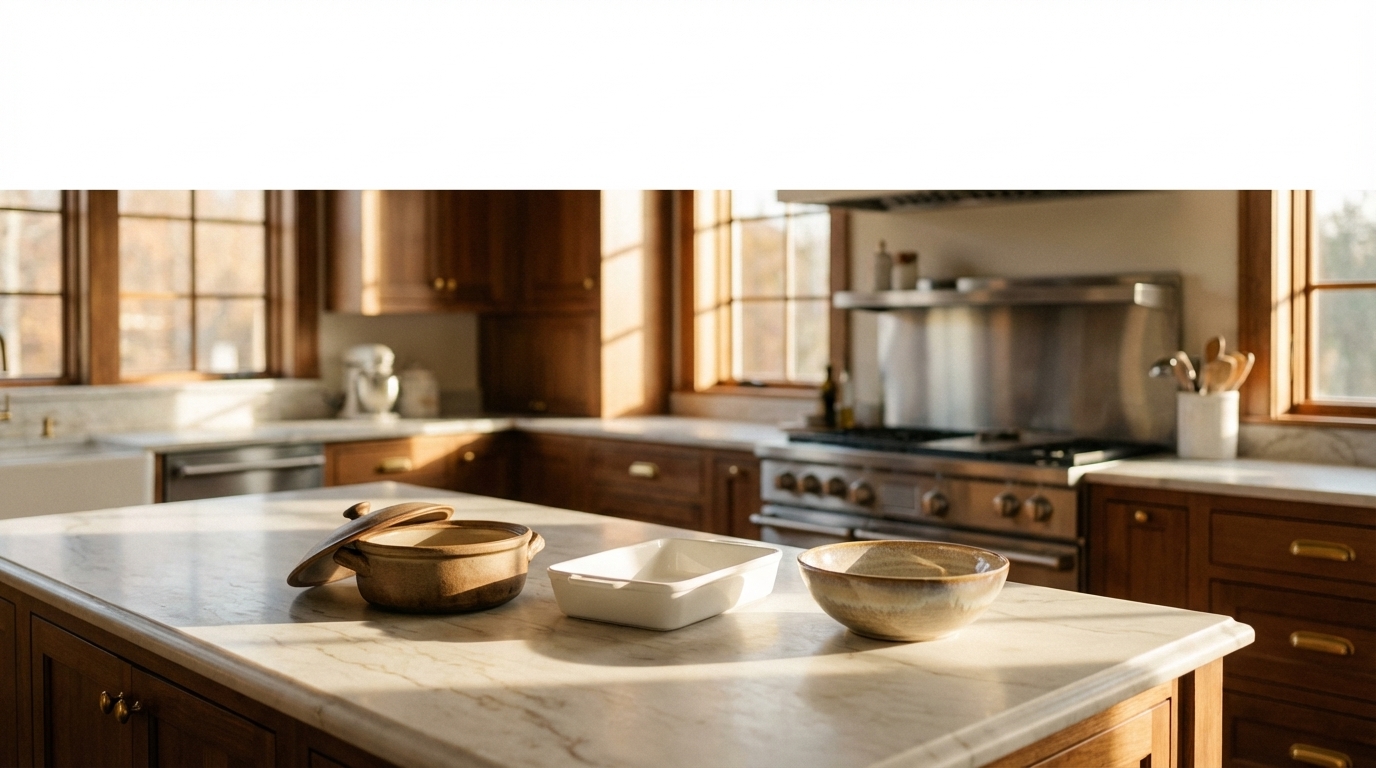
Stoneware and ceramic may share clay roots, but stoneware's high-fire recipe--quartz for strength, feldspar for fusion, and 2,100-2,381 degreesF heat--vitrifies into a non-porous, chip-resistant workhorse that retains heat for casseroles and artisan breads, outlasts standard ceramics by decades, and sits mid-market in price, while both materials demand gentle temperature transitions, hand-washing for longevity, and vigilant shopping for FDA food-safe glazes free of lead or cadmium; the article equips cooks to match cookware to method, avoid stovetop or broiler shocks, and invest in versatile, sustainably-fired pieces whose 55 % upfront energy cost is offset by generations of use and creative end-of-life reuse, turning everyday kitchen decisions into long-term health, safety, and environmental wins.
What Is Stoneware? How It Fits Into the Ceramic Family
Stoneware's high-fire clay-quartz-feldspar recipe fuses into a non-porous, water-tight workhorse that survives 2,100-2,381 degreesF and daily kitchen abuse while showing off earthy, glaze-kissed beauty.
Defining stoneware: composition, firing temperature, and glaze options
Think of stoneware as the workhorse of the ceramic world--it's built tough for everyday use. The secret lies in its unique recipe: clay minerals for shaping flexibility, quartz for strength, and feldspar that helps everything fuse together during firing [3]. This combination creates the durability you need in hardworking kitchen pieces. Here's what makes stoneware special: it's fired at seriously high temperatures.
We're talking 2,100 degreesF to 2,381 degreesF--hot enough to transform the clay into something incredibly strong [1][2]. At these temperatures, two things can happen. Mid-range firing (2,100 degreesF to 2,300 degreesF) creates dense pottery with a separate glaze layer, while high-fire temperatures push it even further, creating a completely non-porous surface where the glaze and clay body actually merge together [1]. This firing process naturally produces beautiful earth tones--from light grey and buff to deeper greys and browns [1].
The glazes used depend on the firing temperature. Mid-range glazes offer vibrant colors and rich visual effects, while high-fire glazes lean toward subtler palettes with various finishes from glossy to matte [1][2]. What does this mean for your kitchen? You get cookware that's incredibly durable, completely water-resistant, and ready to handle whatever you throw at it--just like quality stainless steel cookware that's built to last [2][3].
Performance Showdown: stoneware vs ceramic in Everyday Cooking
Stoneware's slow, even heat turns out flawless casseroles and crusty loaves, but yank it straight from fridge to oven or set it on a burner and you'll crack your decades-worthy pan.
Heat retention, even cooking, and durability for daily meals
When it comes to everyday cooking, stoneware and ceramic perform quite differently in your kitchen. Stoneware is the champion of heat retention--it absorbs heat slowly and releases it just as gradually, giving you those perfectly even cooking temperatures that prevent burning. This makes it your go-to for casseroles, bread baking, and any slow-cooked dish where steady heat matters.
Thinner ceramic pieces heat up faster, but watch out for hot spots that might require you to stir or rotate your food more often. Here's where the materials really show their differences: stoneware's vitrified, non-porous structure makes it incredibly resistant to chips and cracks from daily use and temperature changes [4]. With proper care, your stoneware pieces can literally last decades.
Standard ceramics, while still useful, typically can't match that resilience to thermal shock and everyday bumps. One thing to remember--stoneware holds heat long after you take it out of the oven, which keeps your food warm at the table but means you'll want to use those pot holders.
Versatility across ovens, microwaves, dishwashers, and stovetop use
Let's talk about where you can actually use these materials in your kitchen. Stoneware shines in the oven, typically safe between 350 degreesF and 500 degreesF depending on the quality [4]. But here's a crucial tip: never move stoneware straight from fridge to hot oven--that temperature shock will crack it [5].
And keep it away from direct heat! Your stovetop, whether gas, induction, or electric, is off-limits for stoneware. Same goes for the broiler--direct heat causes immediate damage [5].
Some ceramic pieces offer more flexibility, though microwave safety for both materials really depends on how they're made and glazed. As for cleanup, most quality stoneware pieces can handle the dishwasher, though hand washing helps prevent tiny cracks in the glaze over time [5]. The key is matching your cookware to your cooking method--understanding these limits prevents damage and keeps your pieces performing their best for years.
Choosing the Best Material for Your Kitchen and Wallet
Invest once in durable stoneware that delivers steady, even heat for everything from crusty breads to slow-braised dinners, and--with simple hand-washing and gentle temperature transitions--it will outlast and out-cook cheaper pans while costing less over decades than replacing them.
Ideal dishes and cooking scenarios for stoneware vs ceramic
Choosing the right material often comes down to what you're cooking.
Stoneware truly shines when you need steady, even heat--think crusty artisan breads, bubbling casseroles, and slow-braised dishes that transform tough cuts into tender meals.
Its heat-holding power means your
Cost, lifespan, and practical care tips that keep your cookware affordable
When considering cost, stoneware sits comfortably in the middle--pricier than basic earthenware but more budget-friendly than porcelain [6]. Here's what really matters: stoneware's durability makes it a smart long-term investment.
With proper care, quality pieces last decades, making that initial purchase feel like pocket change over time [4]. To get the most from your investment: - Temperature transitions matter: Let hot dishes cool before washing, and bring cold dishes to room temperature before heating - Daily cleaning is simple: Warm soapy water does the trick--skip the abrasive cleaners that can damage glazes [4] - Handwashing extends life: While dishwasher-safe, handwashing prevents those tiny glaze cracks that develop over time [4] - Tackle stains gently: A warm water soak beats harsh scrubbing every time [6] The smartest approach?
Build your collection with versatile pieces that multitask. A good casserole dish that goes from stovetop to oven to table serves you better than three specialized pieces gathering dust.
Health, Safety, and Sustainability: stoneware vs ceramic
To stay truly safe and sustainable, choose FDA-certified stoneware for its vitrified, lead-free durability that outlasts porous ceramics and keeps toxic glazes out of your kitchen and landfills.
Non‑toxic glazes, lead‑free certification, and food‑safe guarantees
Safety certifications for ceramic products address two distinct concerns: food safety and material toxicity. The FDA defines "food safe" standards specifically for lead and cadmium release from fired glazes [7]. "Dinnerware safe" certification requires meeting FDA food safety standards plus having surfaces free of bacterial-trapping textures and chemical durability [7].
Stoneware holds an advantage in this area--its vitrified structure allows certain surface textures to remain food-safe when properly fired at mid or high temperatures, unlike porous earthenware bodies that may absorb water through microscopic cracks [7]. Identifying truly safe cookware requires understanding certification markings rather than relying on marketing terms. Products labeled "non-toxic" or "lead-free" only indicate the wet glaze passed toxicological examination, not that the final fired product is safe for food contact [7].
The FDA has discovered supposedly "lead-free" imported pottery containing extractable lead at levels exceeding safety thresholds [8]. Lead poisoning presents serious health risks, particularly to children, potentially causing developmental delays, learning disabilities, and nervous system damage even without obvious symptoms [8]. When purchasing ceramic cookware, look for specific FDA-compliant food safe certifications and avoid traditional pottery with bright colors or from unregulated sources, handmade pieces with improper firing, or decorative antiques repurposed for food [8].
Environmental impact: durability, recyclability, and reducing landfill waste
Stoneware and ceramic materials offer significant environmental advantages through their exceptional durability. Unlike disposable or short-lived products, high-quality ceramics last decades--sometimes generations--dramatically reducing replacement frequency and associated waste [9]. Stoneware, with its vitrified, non-porous structure, typically outlasts more porous ceramic options, providing even greater landfill diversion [9].
Both materials derive from abundant natural resources including clay, feldspar, and quartz, which decompose back into earth without releasing microplastics or toxic residues [9]. Though ceramic production requires substantial energy--with firing accounting for 55% of thermal energy consumption in manufacturing [10]--this initial environmental investment is offset by ceramics' extraordinary lifespan [9]. Modern manufacturers increasingly implement eco-conscious practices like energy-efficient kilns and locally-sourced materials to reduce carbon footprints [10].
When ceramics eventually break, they remain valuable resources rather than waste--suitable for mosaic art projects, drainage material in garden beds, or even crushed for road base material [9]. Small-batch ceramicists often prioritize sustainable production methods that minimize waste throughout the manufacturing cycle [10]. For the environmentally conscious consumer, choosing high-quality stoneware represents a meaningful step toward reducing household waste through products designed for generations of use rather than planned obsolescence.
- Stoneware fired at 2,100-2,381 degreesF vitrifies into a non-porous, chip-resistant body
- Stoneware excels at slow, even heating but never goes on stovetop or under broiler
- Avoid thermal shock: never transfer stoneware straight from fridge to hot oven
- FDA "food safe" and "dinnerware safe" certifications confirm low lead/cadmium release
- Dishwasher-safe stoneware lasts decades if cooled before washing and hand-washed
- High-fire stoneware costs more than earthenware yet outlives porous ceramics
- Broken stoneware can be upcycled for mosaics or garden drainage, cutting landfill waste
- https://www.soulceramics.com/pages/guide-to-kiln-temperature-ranges-for-pottery?srsltid=AfmBOoqFj-0RCe_pAF8oHgxdEGtFS7Y902IOo2uGZjPIXYVQoJStjj4-
- https://kilnfrog.com/blogs/frogblog/kiln-temperatures?srsltid=AfmBOoogchQvdO65BtVogbRFrGaJ782IB8mSXxcx-41tZYBD2aGELCbX
- https://crafty-clayworks.com/blogs/news/stoneware-clay-composition?srsltid=AfmBOoqxmZm1Z5H6rfbBK4tIwVlqwz3GhFvmGfXPK5YzjtUonlaCmmsw
- https://www.lenox.com/blogs/buying-guide/ceramic-vs-stoneware
- https://kitchenpluse.com/is-stoneware-oven-safe/
- https://globalreachceramic.com/blog_details/stoneware-vs-porcelain-vs-earthenware
- https://www.maycocolors.com/resources/dinnerware-food-safety/
- https://www.fda.gov/food/environmental-contaminants-food/questions-and-answers-lead-glazed-traditional-pottery
- https://homeyceramic.com/porcelain-and-stoneware-are-eco-friendly-materials/
- https://wllw.eco/blogs/journal/healthy-materials-series-ceramic?srsltid=AfmBOop6-jkf07tECnzqxQ-4rv3ijrr6-M3cqQXlw-HWsyuFUlLtlDIi