

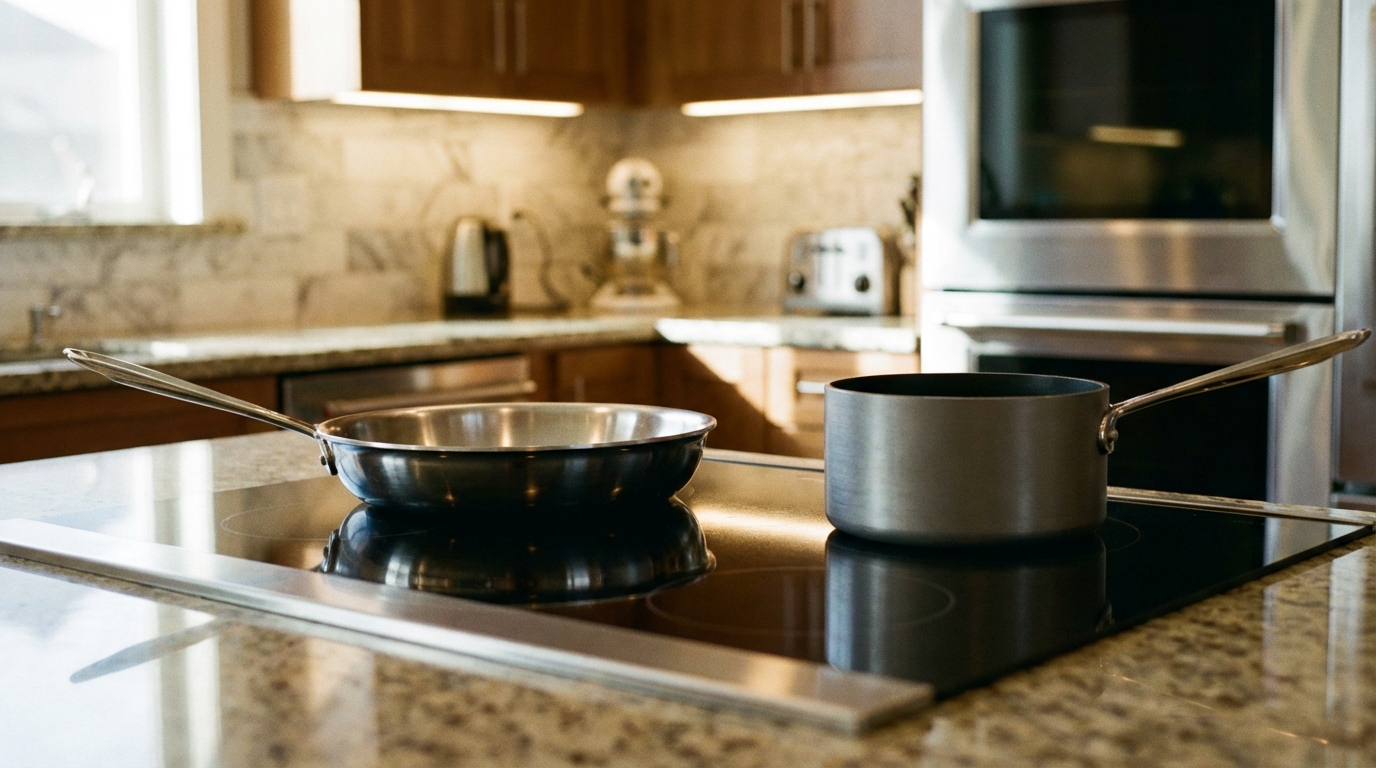
Understanding the physics of warping--thin metals expanding unevenly under rapid temperature swings--empips readers to choose cookware that stays flat on glass tops, and this article shows exactly how to do it without overspending. By prioritizing thickness (2.5 mm+) and multi-ply construction--tri-ply stainless, hard-anodized aluminum with a reinforced base, or thick disc-bottom stainless--home cooks gain pans that spread heat evenly, eliminate hot-spot buckling, and protect the smooth cooktop from scratches while lasting decades. Practical habits seal the deal: start on low-medium heat, match burner to pan size, add only room-temperature liquids, and keep both pan bottom and glass spotless with vinegar or ceramic cleaner to prevent baked-on residue and thermal shock. The payoff is cookware that browns consistently, uses less energy, cleans up faster, and avoids the landfill, delivering professional performance on glass today and on any future stove you might own.
Choosing War-Resistant Cookware for Glass Surfaces
To keep your glass cooktop pristine and your cooking even, choose multi-ply stainless or hard-anodized pans with dead-flat bases that spread heat uniformly and never shock them from cold to hot.
Understanding Why Warping Happens
Think of your pan as two connected parts: the base that touches your cooktop and the walls that form a rigid ring around it. When you heat the base too quickly, it wants to expand--but those walls won't let it grow sideways. The only way out?
Buckling up or down. [1] This creates an immediate problem on glass cooktops. Once your pan warps, it rocks on the flat surface instead of making full contact. You'll notice hot spots, uneven cooking, and frustratingly inconsistent results. [2] Three everyday habits cause most warping: - Heating empty pans on high heat - Cranking burners from cold to maximum too quickly - Shocking hot pans with cold water Each forces metal to expand or contract faster than it can handle. [2] The thinner your pan, the worse it gets--thin metal can't gradually absorb temperature changes, so it buckles instead.
While soft metals like aluminum and copper warp fastest, even stainless steel will eventually bow under extreme conditions. [1]
Material Choices That Stay Flat
Some materials handle the repeated heating and cooling of glass cooktops better than others. The key? Even heat distribution that prevents the center-focused hot spots that cause warping.
Multi-ply stainless steel leads the pack. By sandwiching aluminum between stainless steel layers, these pans spread heat evenly from edge to edge--eliminating the concentrated center heat that makes pans buckle. [3] Hard-anodized aluminum with a reinforced stainless steel base takes a different approach but achieves the same goal. The anodized surface won't scratch your glass cooktop, while the steel-reinforced base stays rigid through countless heat cycles. [3] Both constructions share one crucial feature: completely smooth, flat bottoms.
This matters for two reasons--preventing warping and protecting your cooktop from scratches and cracks that rough surfaces cause over time. [3] Skip raw cast iron on glass cooktops. Its unfinished surface scratches easily, and the heavy weight makes accidental dragging almost inevitable. If you love cast iron, stick with enameled versions--the smooth coating protects both your pan and your cooktop. [3]

Everyday Cookware Materials That Pass the Test
Hard-anodized aluminum pans with 2.8 mm stainless-steel-reinforced bases stay dead-flat on glass cooktops because their dense, heat-tempered surface and bonded plate spread heat slowly and evenly, wiping out warping and scratching for years of daily cooking.
Hard-Anodized Aluminum with Reinforced BaseHard-anodized aluminum takes a completely different path to warp resistance. The anodizing process transforms the aluminum's surface, creating a harder, denser layer that won't break down under high heat like regular aluminum. [6] But the real hero for glass cooktops is underneath--a bonded stainless steel plate that keeps the base rigid and spreads heat evenly, preventing those problem hot spots that lead to warping. [7] Thickness matters here.
Quality hard-anodized pans feature bases around 2.8mm thick, which absorb heat gradually rather than shocking the metal with sudden temperature spikes. [7] That slow, even heating is exactly what keeps pans flat on glass surfaces through years of daily use. Plus, that smooth anodized surface glides safely across your cooktop without the scratching risk of rougher materials. [6]
Practical Care Tips to Keep Your Cookware Flat
Keep your pans--and your glass cooktop--flawless by matching burner to pan size, wiping greasy bottoms before each use, and slipping a cloth between stacked cookware to stop hidden scratches before they start.
Heat Management on Glass Stoves
Here's something glass stoves reveal that coil burners often hide: mismatched pan and burner sizes can wreck your cookware. When your burner is smaller than your pan, the center gets hot while the edges stay cool.
That hot center expands but can't spread outward, so it buckles up or down instead. [8] The fix? Match your burner size to your pan as closely as possible--you'll prevent warping and stop wasting heat around the edges. [2] Even simpler: start cooking on low or medium heat, then gradually increase.
This gives your entire pan base time to warm evenly, preventing the uneven expansion that causes warping on glass cooktops. [8]
Cleaning and Storage Practices
Your cleaning routine can protect both your cookware and cooktop--or destroy them. Those greasy pan bottoms you might ignore? They're cooktop killers.
When that buildup hits hot glass, it bonds permanently, leaving rings that won't budge. [9] Quick fix: wipe pan bottoms before cooking, every time. And always lift your cookware instead of sliding--even smooth pans scratch when dragged. [9] For the cooktop itself, keep it simple: dish soap and a soft sponge do the job. Skip the abrasive cleaners and steel wool--they'll leave permanent scratches that only a full cooktop replacement can fix. [9] Storage matters too.
Stacking pans without protection is like dragging them across your cooktop in slow motion--the bottom of one pan gradually roughens the cooking surface below it. A simple pan protector, cloth, or even paper towel between stacked pieces prevents these micro-scratches that eventually turn smooth pan bases into glass-scratching surfaces. [9]


Affordable Quality Options and Long-Term Value
Spend once on disk-bottom stainless or hard-anodized aluminum that stays flat and heats evenly for decades, and you'll never again waste money replacing warped, scorched pans.
Budget-Friendly Picks That Last
You don't have to spend a fortune to get cookware that stays flat on your glass cooktop. The secret is knowing which constructions deliver the most durability per dollar. Disk-bottom stainless steel leads the pack for warp resistance at lower price points--a thick aluminum disc bonded to the base distributes heat evenly across the cooking surface while keeping the bottom rigid through years of use.
Quality disk-bottom cookware often features 5-8mm aluminum bases that practically eliminate any risk of buckling. [10] When shopping, look for these proven constructions at different price levels. At moderate prices, disk-bottom stainless with measurement markings inside the saucepans saves time during everyday cooking while delivering even browning without scorching. [11] Moving up slightly, 10-piece sets that combine stainless exteriors with bonded aluminum bases offer quick, even heating and clever features like integrated straining lids--one less piece of equipment cluttering your kitchen. For those wanting comprehensive sets, multi-ply options around the $370 mark consistently pass durability testing, eliminate hot spots even when pans aren't perfectly centered, and often include extras like steamer inserts.
If nonstick is what you're after, hard-anodized aluminum with reinforced bases makes full contact with glass surfaces for consistent browning on everything from pancakes to steaks. These typically offer dishwasher-safe convenience, though double-check induction compatibility with your specific cooktop. [11] Whatever your budget, investing in proper construction beats replacing warped pans every few years--and quality stainless steel cookware built with these principles can serve your kitchen for decades.
Extending Lifespan to Reduce Waste
Here's something to consider: the most sustainable cookware is the one you never have to replace. Stainless steel pans built without coatings or delicate bases can easily last 50 years--some families pass the same pots through multiple generations. [12] Compare that to typical nonstick pans where scratched coatings and warped bases send them to landfills within just a few years of regular use. [12] Smart shopping multiplies these benefits. Choosing versatile pieces that transition from stovetop to oven means fewer total items in your kitchen.
Every pan you don't need to buy saves both money and the energy required to produce it. [12] Look for cookware that pulls double or triple duty--a good saute pan can handle everything from weeknight stir-fries to Sunday roasts. Want to take sustainability even further? Consider secondhand stainless steel or cast iron cookware.
These materials handle decades of heavy use without losing performance, so that vintage find at the thrift store works just as well as brand new--minus the manufacturing footprint. [12] Whether buying new or used, choosing cookware built to last transforms a kitchen purchase into a long-term investment that benefits both your cooking and the environment.
- https://medium.com/the-genuine-article/warped-4cc21400dc51
- https://support.circulon.com/support/solutions/articles/65000167026-my-product-isn-t-working-on-my-ceramic-glass-top-stove
- https://www.thespruceeats.com/best-cookware-for-glass-stoves-4690491
- https://stahlkitchens.com/blogs/news/triply-vs-stainless-steel?srsltid=AfmBOopD8K_6JLMJ1IhdNx15iHwC-igyAjCqD1jommv00IaNiO5kOSkD
- https://shop.ttkprestige.com/blog/post/buying-guides/triply-vs-stainless-steel-cookware?srsltid=AfmBOopJb9BsY095K_g3ufBGzGmDa7tYDXBvjI32I4wjb_jXQf4cixxe
- https://www.amazon.com/All-Clad-Anodized-Professional-Dishwasher-Friendly-Oven-Safe/dp/B0G3D6S9CY
- https://www.gothamsteel.com/products/gotham-steel-pro-hard-anodized-8-piece-set
- https://cooking.stackexchange.com/questions/13220/why-do-my-nonstick-fry-pans-bow-up-and-not-make-good-contact-with-my-flat-top
- https://www.thespruce.com/smoothtop-electric-cooktop-care-1908592
- https://www.reddit.com/r/cookware/comments/1q6i9od/cookware_that_wont_warp_for_glasstop_stove/
- https://www.foodnetwork.com/how-to/packages/shopping/product-reviews/best-pans-for-glass-cooktop
- https://www.sustained.kitchen/latest/2020/7/7/sustainable-cookware-101