

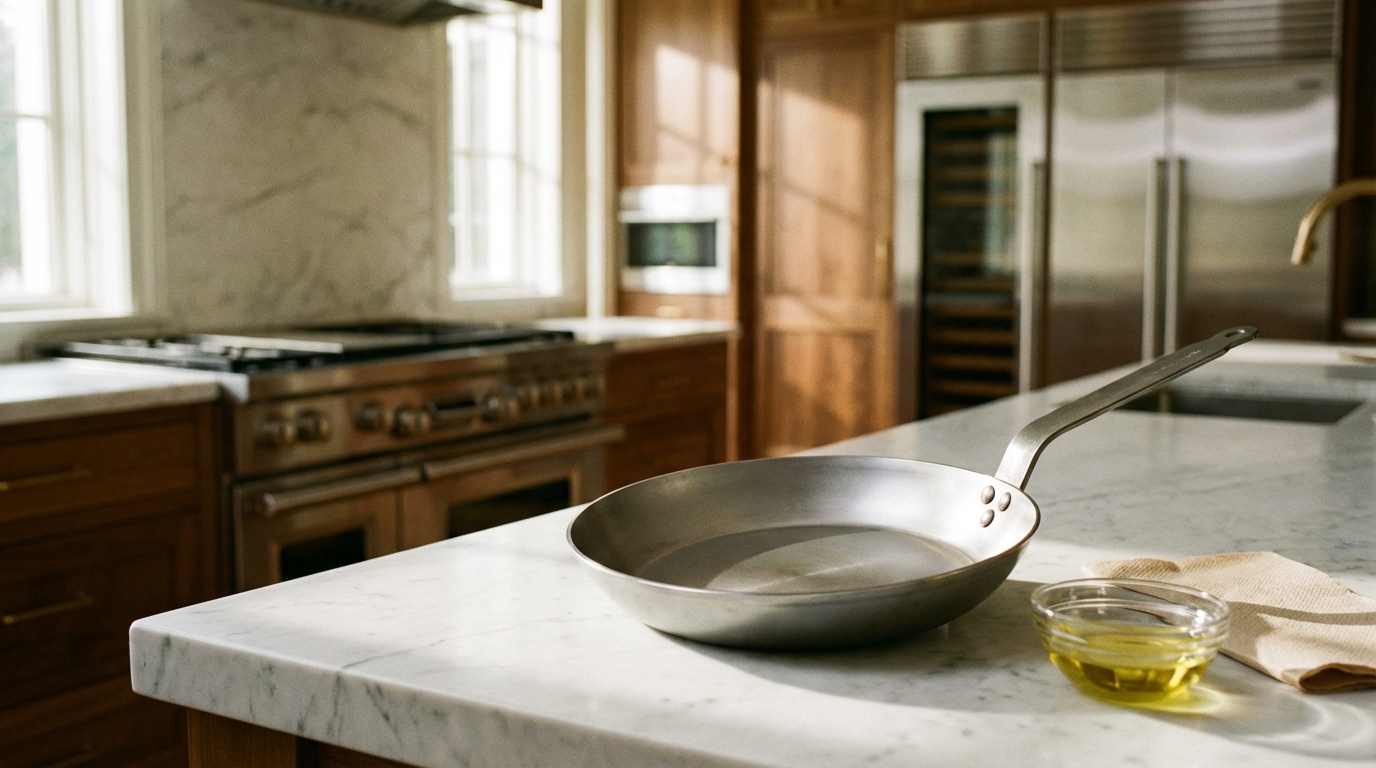
Mastering carbon-steel cookware is less about buying the right pan and about building a living, ever-improving non-stick surface, and this guide demystifies every step of that process. Readers learn the science: thin coats of high-smoke-point oil polymerize into a natural, flavor-enhancing, rust-blocking shield that darkens and strengthens with every meal, outlasting synthetic coatings while using less oil. The article walks through the critical first seasoning--pre-heat to 450 degreesF, wipe on an almost invisible film of canola or grapeseed, bake or burner-smoke at 500 degreesF until the smoking stops, then repeat three to five times for a rock-solid foundation--and shows how a 30-second post-cook rinse, salt scrub, and ultra-thin oil wipe keeps the patina growing. It arms home cooks with troubleshooting tricks (kosher-salt scrub for light stickiness, a potato-peel-and-salt fry for bigger restoration) and explains when dull spots or tacky patches signal it's time to re-season, so the pan never reaches the point of no return. By following these steps, anyone can turn reactive bare metal into a low-maintenance, heirloom-worthy workhorse that sears steaks, fries eggs, and stir-fries vegetables with steadily improving performance for decades.
The science behind seasoning carbon steel pan
Season your carbon-steel pan once, and you'll unlock a living, ever-improving non-stick surface that repels rust, needs less oil, sears better, and lasts decades--growing darker, slicker, and more flavor-enhancing every time you cook.
Everyday benefits: natural non‑stick performance and longer pan life
When you season carbon steel properly, something amazing happens--you get natural non-stick performance that rivals any synthetic coating, without the chemicals. Food releases easily from the surface, and you'll need less cooking oil than with unseasoned pans. That polymerized layer you're creating?
It's actually a protective barrier that keeps rust at bay and helps your pan last for years (or even decades). Here's what makes it even better: the more you cook, the better it gets. Your pan's patina will darken and improve over time, giving you better heat distribution and cooking performance.
Unlike those synthetic non-stick coatings that eventually chip and peel, your seasoned surface just gets stronger with each use. Plus, you'll notice your food starts tasting better--especially when you're searing steaks or stir-frying vegetables at high heat. That's because a well-seasoned carbon steel pan develops its own unique character that actually enhances flavors.

Preparing your pan for the first seasoning
Dry your pan thoroughly on low heat, then pick a neutral, high-smoke-point oil--avocado, grapeseed, canola, lard, or shortening--because when it hits about 375 degreesF it polymerizes into the slick, protective seasoning layer that keeps food from sticking and flavors true.
Strip factory coating and clean the surface safely
Your new
Dry completely and choose a high‑smoke‑point oil for seasoning
Since proper drying is so important, let's make sure you nail it: keep your pan on low heat until it's bone dry. Now for the fun part--choosing your seasoning oil. You'll want something with a high smoke point (at least 375 degreesF) because that's when the magic happens [4].
As oil hits its smoke point, it transforms through polymerization into that slick, protective layer you're after [6]. Go with neutral oils that won't mess with your food's flavor--avocado, grapeseed, and canola oils are all champions at creating stable, long-lasting seasoning [5]. Feeling traditional?
Lard and shortening work beautifully too [5]. Just steer clear of low smoke point oils or anything with strong flavors--they'll leave you with sticky spots and weird tastes in your food [4]. (We'll walk through the exact application process in the next section.)
Step‑by‑step guide to seasoning carbon steel pan
Master carbon steel seasoning by heating to 450 degreesF, wiping on the thinnest possible coat of high-smoke-point oil until the pan looks nearly dry, then blasting it at 500 degreesF until the smoking stops and the metal browns--repeat 3-5 times for a bulletproof non-stick surface.
Heat, apply an ultra‑thin oil film, and polymerize the layer
Start by heating your clean, dry pan in a 450 degreesF oven or on a stovetop burner to prepare it for oil application [7]. This pre-heating helps ensure the oil goes on as thinly as possible. Once heated, apply oil with a folded paper towel that's barely dampened with a high smoke point oil like canola, grapeseed, or vegetable oil [7]. The critical step most people get wrong: wipe off all excess oil with a clean paper towel until the pan appears dry with only a matte sheen, not glossy [8].
Any visible oil means you've applied too much, which will create sticky spots instead of proper seasoning [8]. Return the pan to high heat (500 degreesF in the oven or highest setting on stovetop) and watch for smoking--this indicates the polymerization process is happening [7]. On new carbon steel, you'll actually see the surface change color as oil transforms into polymer, turning a light brown [7]. This smoking process will continue for several minutes on a stovetop or about 30 minutes in an oven before stopping, signaling completion of the transformation [7].
Be prepared for significant smoke by opening windows and using ventilation [7]. The thin layer has now polymerized, creating the first stage of your non-stick surface.
Repeat cycles or use an oven finish for a resilient patina
Building multiple thin layers through repeated seasoning cycles creates the most durable finish on carbon steel. Apply at least 3-5 layers for optimal results, as each new layer adds a carbon foundation that bonds to both previous and new polymer layers [8]. Between applications, allow the pan to cool just enough to handle safely (5-8 minutes) before adding the next ultra-thin oil coat [8].
This minimal cooling approach maximizes polymerization efficiency while reducing overall time and energy use [8]. Higher-temperature seasoning (around 500 degreesF) produces a darker finish because it accelerates both carbonization and polymerization, trapping more material in the oxygen-free layer [8]. After applying your final layer, allow the pan to cool completely inside the turned-off oven for at least 30 minutes to finalize polymerization [8].
This patience during the final cooling ensures the layers fully bond together, creating a resilient patina that improves with use. The result is a dark, smooth surface that becomes increasingly stick-resistant and durable with each cooking session.


Maintaining and re‑seasoning for lasting performance
A 30-second post-use ritual--hot-water rinse, salt-and-oil scrub, thorough dry, and a whisper-thin oil buff--keeps your carbon steel pan forever non-stick and rust-free.
Everyday cleaning, quick oil touch‑up, and rust prevention
Keep your carbon steel pan performing like new with simple daily care. After cooking, rinse with hot water and gently scrub with a soft brush while the pan's still warm--the heat helps loosen any stuck bits. Skip the soap when you can, since it can wear down your hard-earned seasoning. Got stubborn food stuck on? Make a quick paste with coarse salt and oil, then scrub with a paper towel.
Here's the key: always dry your pan completely on low heat right after cleaning. While it's still warm, give it a quick oil touch-up using the same technique from initial seasoning--wipe on the thinnest possible layer with a folded paper towel, then buff away any excess until the surface looks dry, not shiny. This 30-second routine keeps building that protective layer with every use. For storage, make sure your pan is bone-dry and give it room to breathe. Hang it if you can, or slip a paper towel between stacked pans to prevent moisture buildup.
Living somewhere humid? Toss a silica gel packet in your cookware cabinet or apply a slightly heavier oil coat for extra protection. Notice any dull or light spots developing? Hit them with a quick oil application right away--it's much easier to prevent rust than remove it.
When and how to re‑season efficiently to restore the patina
You'll know it's time to re-season when food starts sticking more often, the surface feels sticky or tacky, or you see chips in the coating. Don't worry--restoring your pan is straightforward once you know what to look for. For minor issues like slight stickiness or uneven spots, start simple: scrub with kosher salt and oil or use a moderately abrasive sponge until the surface feels smooth all over [9]. If you're dealing with that annoying tacky residue from oil that didn't fully polymerize, it's actually fine to use a small amount of soap here [9].
Need a deeper restoration? Try the potato peel method that really works: mix 1⁄3 cup oil, 2⁄3 cup salt, and peels from two potatoes right in your carbon steel pan [9]. Cook this mixture over medium heat for 8-10 minutes, moving the peels around to hit all surfaces including the sides [9]. The salt scrubs while the potato peels help regulate temperature for better polymerization--pretty clever, right? [9] After your restoration scrub, dry the pan thoroughly and apply a fresh seasoning layer using the method from earlier sections: heat the pan, apply the thinnest oil layer possible, wipe away excess, then heat until it smokes for about 2 minutes [9].
Here's something to remember: your pan might look splotchy or uneven in color, but that's totally normal [9]. What matters is how smooth it feels, not how uniform it looks.
- Seasoning creates natural non-stick without chemicals and improves with use
- Use high-smoke-point neutral oils like grapeseed or canola for seasoning
- Apply oil ultra-thin: wipe until pan looks dry, no visible oil remains
- Build 3-5 layers at 500 degreesF, cool 5-8 min between each thin coat
- Daily: rinse, scrub, dry on low heat, wipe thinnest oil while warm
- Restore sticky spots with salt-oil scrub or potato-peel-salt method
- Re-season when food sticks or surface feels tacky, not when color is uneven
- https://matferbourgeatusa.com/education/black-steel-guide/
- https://www.hungryonion.org/t/carbon-steel-pan-seasoning-my-manual-on-how-to-do-it/33365
- https://www.reddit.com/r/carbonsteel/comments/103aywl/for_folks_who_are_having_troubles_getting_the/
- https://www.debuyer-usa.com/blogs/guides/the-best-oil-for-carbon-steel-pans-boost-longevity-and-performance?srsltid=AfmBOopJ2lGI90k7CqPnhHEb1OrBS_c_WGAvnlskIB_h8KYfD3LTioLn
- https://blanccreatives.com/blogs/news/best-oils-for-seasoning?srsltid=AfmBOorbx_2IMGRa_BgJGFV6niSj7ZXnjoo8YbMk-urB231ufI0nPP2s
- https://www.lodgecastiron.com/pages/cleaning-and-care-cast-iron-oils-cast-iron-cooking-and-seasoning?srsltid=AfmBOoqVINfem2ChFZOjj42n0eguCFODkxn7k_zxG04vYQLgVZYG3db2
- https://www.seriouseats.com/how-to-season-carbon-steel-pans
- https://www.reddit.com/r/carbonsteel/comments/nzv92d/the_ultimate_seasoning_guide_with_waaaay_more/
- https://www.americastestkitchen.com/articles/2279-how-to-season-carbon-steel-cookware