

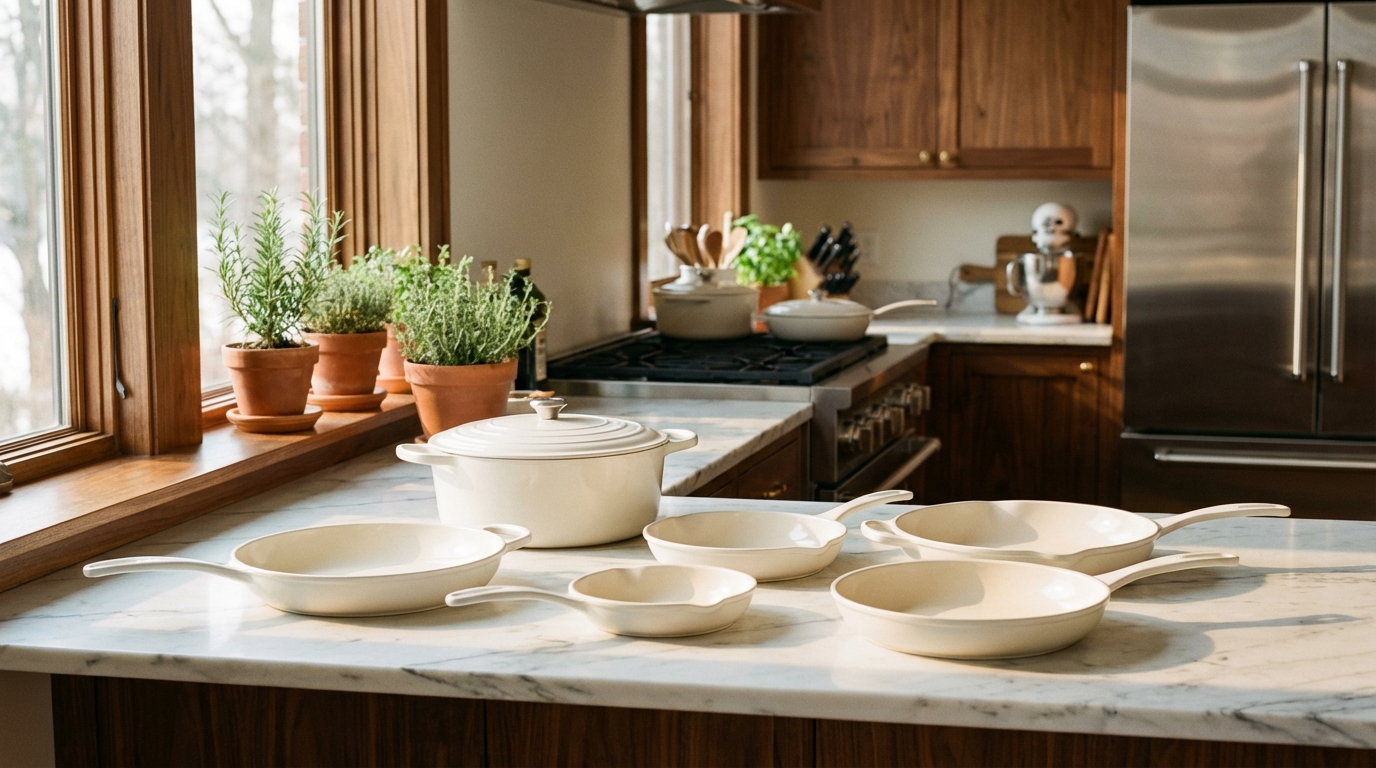
Decoding ceramic-cookware labels turns you from a bewildered shopper into a confident guardian of your family's health, because this article walks you through the marketing fog--explaining why "non-toxic," "100 % ceramic," and "PTFE-free" can mean very different things, how to spot third-party lab certifications, heavy-metal testing, and temperature thresholds that separate truly inert pans from quick-slip coatings that can micro-crack and leach. You will learn the four safety factors that matter most: the purity of the mineral-based sol-gel surface, the absence of nanoparticle pigments, the hardness of the forged-aluminum or stainless base for even heat (so the ceramic doesn't overheat and degrade), and the quality of the silicone-sealed rim that keeps moisture from delaminating the interior. The piece then shows how gentle hand washing, nylon tools, and pre-heating oils instead of dry searing can stretch that non-toxic performance for years, saving you from the hidden cost of replacing chipped pans every season. Finally, it proves that a safer kitchen doesn't demand a luxury splurge--ranking budget brands that meet the same European and California prop-65 standards as the premium labels, offering seasonal sale calendars, and demonstrating how one versatile 12-inch lidded skillet can replace a stack of chemically questionable non-sticks, protecting both your wallet and your well-being without compromise.
Understanding Ceramic Cookware Labels and What "Non‑Toxic" Really Means
Decoding common label terms: PTFE, PFOA, and ceramic coatings
Let's decode those cookware labels you see every day. Three terms pop up constantly--PTFE, PFOA, and ceramic--but they're not as straightforward as they seem. PTFE (the coating behind Teflon) has been around since the 1940s. PFOA, which was used to make PTFE, has been linked to serious health concerns including liver damage and lowered immunity in children. Both belong to a family of thousands of chemicals called PFAS--nicknamed "forever chemicals" because they stick around in your body and the environment. [1] Here's the tricky part: even "PFOA-free" labels on PTFE pans can be misleading.
Consumer Reports found that some PTFE-coated pans labeled "PFOA-free" still contained measurable PFOA and other PFAS compounds--up to 703 parts per billion in some samples. [1] This happens because PFOA can form during the manufacturing process, even when it's not intentionally added. So what about ceramic? Most "ceramic" cookware isn't quite what it sounds like. It's actually a sol-gel coating--a mix of silica, metal oxides, and binders--sprayed onto metal and heated to 400-800 degreesF. That's way below the 2,000 degreesF needed for true ceramics. [2] This matters because these coatings can start breaking down above 500 degreesF, potentially releasing chemicals--the same issue that made PTFE controversial. [3] The formulas in these coatings are often trade secrets.
Independent testing has found titanium dioxide nanoparticles (banned in food in the EU) in several ceramic-coated pans, with studies showing it can migrate into food. [3] And those "PFAS-free" claims? With thousands of PFAS out there and most tests only checking for about 100, a pan can pass and still contain untested varieties. [1] Your best bet: look for "PTFE-free" as a starting point, then dig deeper into what the coating actually contains. When shopping for truly non-toxic cookware, understanding these labels helps you make an informed choice.
Why "ceramic cookware non toxic" matters for health and flavor
The health impact extends far beyond a single cooking session. PFAS compounds build up in your body over time--what scientists call bioaccumulation. This means those small exposures from daily cooking add up. Research has linked this buildup to thyroid problems, developmental issues in children, and increased cancer risk. [5] But you'll notice the difference in your food long before any health test.
While stainless steel and cast iron are great options, they have one quirk: they can release metallic ions when cooking acidic foods like tomato sauce or anything with citrus. Ever notice that slightly metallic taste in your marinara? That's the pan talking. [4] Ceramic-coated pans solve both issues. Their non-reactive surface won't release synthetic chemicals during normal cooking, and they won't interact with your ingredients either.
Your tomato sauce tastes like tomatoes, your lemon chicken tastes like lemon--not like the pan. [4] This combination--safer cooking and better flavor--is why "non-toxic" actually means something here. But only when the coating is truly free of PTFE, PFOA, and those thousands of other PFAS variants. [5]
Key Safety Factors to Look for When Choosing Ceramic Pans
Material composition and durability for everyday use
Want a quick way to gauge quality? Pick up the pan. A heavier pan with a 3-5mm base distributes heat more evenly and resists warping--those lightweight options might save money upfront but wear out faster. [6] The biggest ceramic coating killer?
Thermal shock. Running cold water over a hot pan, deglazing with cold liquid, or preheating empty all stress the coating bond. Add acidic ingredients like tomatoes to the mix, and that degradation speeds up even more.
Most coated pans show performance decline after regular use--we'll cover replacement timing in detail later. [6] Pure ceramic pans--solid clay fired at over 2,000 degreesF--avoid the coating problem completely. No flaking, no delamination, oven-to-table versatility. But they're not perfect either: they crack more easily under temperature changes and need proper preheating with oil to release food well. [6] The real question for your kitchen: which construction matches how you actually cook?
Testing standards and certifications you can trust
Looking for certifications that actually mean something? Start with NSF certification--a voluntary program that verifies products are free of PFOA and other forever chemicals. [2] Here's the catch: even NSF certification has limits. Consumer Reports tested for 96 PFAS compounds (way more than typical tests), and with thousands of PFAS variants out there, no single test catches them all. [1] This testing gap explains why "PFAS-free" labels aren't always reliable--manufacturers might mean "below regulatory thresholds," not actually zero. [1] Your best bet?
Look for "PTFE-free" combined with a ceramic coating. When Consumer Reports tested PTFE-free ceramic pans, they found zero PFAS in their 96-compound screen. Meanwhile, a "PFOA-free" PTFE pan still contained 16 different PFAS compounds. [1] The good news: regulations are catching up.
California banned misleading single-chemical-free claims (like "PFOA-free" on pans with other PFAS) in 2023, with Colorado following in 2024. These laws make manufacturers more accountable for their label claims, even if enforcement is still developing. [1]
Maintaining Non‑Toxic Performance Over the Life of Your Pan
Practical care tips that extend lifespan and reduce waste
Most ceramic pans fail not from a single dramatic mistake but from accumulated small ones.
Heat is the first variable to control: ceramic coatings stay functional at medium heat but degrade when repeatedly pushed to high flame--searing or stir-frying over high heat shortens coating life significantly, even when no visible damage appears. [7] Utensil choice compounds this: metal tools and sharp-edged spatulas scratch the sol-gel surface incrementally with every use, while wooden, silicone, or nylon tools leave it intact. [7] Cooking sprays--aerosol ones in particular--deposit a residue that bonds to the coating under heat and is difficult to remove without abrasive scrubbing, which itself causes damage; a small amount of oil or butter applied directly does the same job without the buildup. [8] Storage is the most overlooked factor: stacking pans bare against each other creates friction that chips and scratches the coating between uses, not during them.
Pan protectors, cloth liners, or a vertical rack that separates each piece eliminates this entirely. [7] These habits don't just protect the coating--they reduce how often pans need replacing, which matters when the average ceramic pan lasts only one to three years under normal use. [7]
Cleaning routines that keep flavor pure and surfaces safe
How you clean a ceramic pan matters as much as how you cook with it.
The single rule that prevents the most damage: let the pan cool completely before washing.
Plunging a hot ceramic pan into cold water causes thermal shock--the same mechanism that cracks coating bonds during cooking--and even a few repeated instances can introduce micro-fractures that compromise the nonstick surface. [9] Once cool, hand washing with warm water, a few drops of dish soap, and a nonabrasive sponge or soft cloth removes nearly everything without risk; dishwashers introduce harsh detergents and high heat cycles that steadily wear down the coating even when the manufacturer lists the pan as dishwasher-safe. [10] Steel wool, abrasive nylon pads, and scouring powders are categorically off the table--they create microscopic scratches that expand over time, turning a functional surface into a sticky one. [9]For burnt-on food, the effective sequence starts with a 30-minute soak in warm soapy water, followed by a damp sponge dipped in dry baking soda used in a circular scrubbing motion. [9] If that doesn't lift it, adding white vinegar to the baking soda paste while it's on the pan creates a bubbling reaction that loosens stubborn residue without abrading the surface. [9] For very entrenched buildup, a mix of two cups water to half a cup of vinegar brought to a brief boil in the pan--then cooled before scrubbing--handles what soaking alone won't. [9] Discoloration that builds up after many uses responds well to 3% hydrogen peroxide: pour enough to cover the pan's bottom, wait 30 minutes for the slight bleaching action to work, then rinse and dry. [9] If the coating has lost nonstick performance but shows no deep gouging, re-seasoning with a seed oil--not olive oil, which burns at too low a temperature--applied thin and heated to its smoking point for five to seven minutes can partially restore function; wipe the excess after cooling. [9]
Building a Safer Kitchen on a Budget Without Compromise
Cost‑effective strategies for assembling a non‑toxic set
When to upgrade vs. when to keep using your current ceramic cookwareKnowing when to replace ceramic cookware isn't always obvious. The good news? Minor scratches won't harm you--ceramic coatings are free from PFAS and PTFE, so surface wear affects cooking performance, not safety. [14] But when damage goes deeper, it's time to upgrade.
Watch for these clear replacement signals: coating that's flaking or chipping down to the metal, persistent sticking even with proper heat and oil use, warping that lifts the pan off your burner, or a handle that wobbles and won't tighten. [15] Warping and loose handles are immediate safety concerns--no amount of careful cooking can compensate for structural problems. [14] Planning replacements saves both money and hassle. As covered in our maintenance section, ceramic-coated pans show their age predictably. If your pan is sticking but the coating looks intact, try re-seasoning with a high-smoke-point oil before shopping for a replacement.
If that doesn't restore the nonstick surface, the coating has worn through. [15] For frequent cooks who want to break the replacement cycle, pure ceramic cookware--solid clay construction rather than a coating--offers a different path. These pans cost roughly twice as much upfront but eliminate flaking concerns entirely, lasting years longer with proper care. [6] The trade-off is weight and different cooking properties, so the choice depends on your cooking style. Daily breakfast cooks might find pure ceramic worth the investment, while occasional users often prefer the lighter weight and lower commitment of coated options.
- "Non-toxic" on ceramic pans is unregulated--verify third-party test marks instead.
- Look for heavy-metal-free glazes, cadmium- and lead-tested, with high firing temps.
- Avoid pans with PTFE side coatings; 100% ceramic means no hidden plastic layer.
- Hand-wash, skip aerosol sprays, and keep under 450 degreesF to preserve the inert surface.
- Scratched or warped pans can leach--replace once glaze is compromised.
- Budget brands can be safe if they carry Prop 65 or EU heavy-metal compliance.
- Darker glazes and unbranded imports carry higher contamination risk.
- https://www.consumerreports.org/toxic-chemicals-substances/you-cant-always-trust-claims-on-non-toxic-cookware-a4849321487/
- https://ceramics.org/ceramic-tech-today/ceramic-coated-cookware-safety/
- https://www.theguardian.com/lifeandstyle/2025/jun/09/ceramic-nontoxic-cookware
- https://www.healthierhomes.com/post/what-is-the-healthiest-material-for-cookware?srsltid=AfmBOoo7gJ14hwRzFKOt0tJBr9Bj_mi51hvHx6A8fIYSczdfEaSviZp-
- https://www.organicauthority.com/guide/ceramic-cookware-pros-and-cons
- https://alva-cookware.us/blogs/news/ceramic-pans-expiry?srsltid=AfmBOoooWHlC2LqC_DxW4UTB-V7T2AOD9QATNuAbkZJxl7LfYyq5ANHr
- https://granitestone.com/blogs/product-care/how-to-properly-care-for-your-granitestone-ceramic-coated-cookware?srsltid=AfmBOoqxD9fhakRqDvVR-_1Dsdzi0ovI8gnT5Ufsn3o2HF7RpYnaHTY4
- https://www.thespruce.com/how-to-clean-ceramic-pan-4775268
- https://crumble.co/blogs/articles/how-to-clean-and-maintain-ceramic-cookware?srsltid=AfmBOoq46WreXZ52Educ-46vnp_sF8rdjL-0K8LSGSNtySuo2QAjDxlL
- https://www.thespruceeats.com/best-ceramic-cookware-sets-4140142
- https://www.foodnetwork.com/how-to/packages/shopping/product-reviews/best-nontoxic-cookware
- https://chopchopusa.com/blogs/news/when-to-replace-ceramic-fry-pans
- https://cookfixes.com/is-ceramic-cookware-safe/