

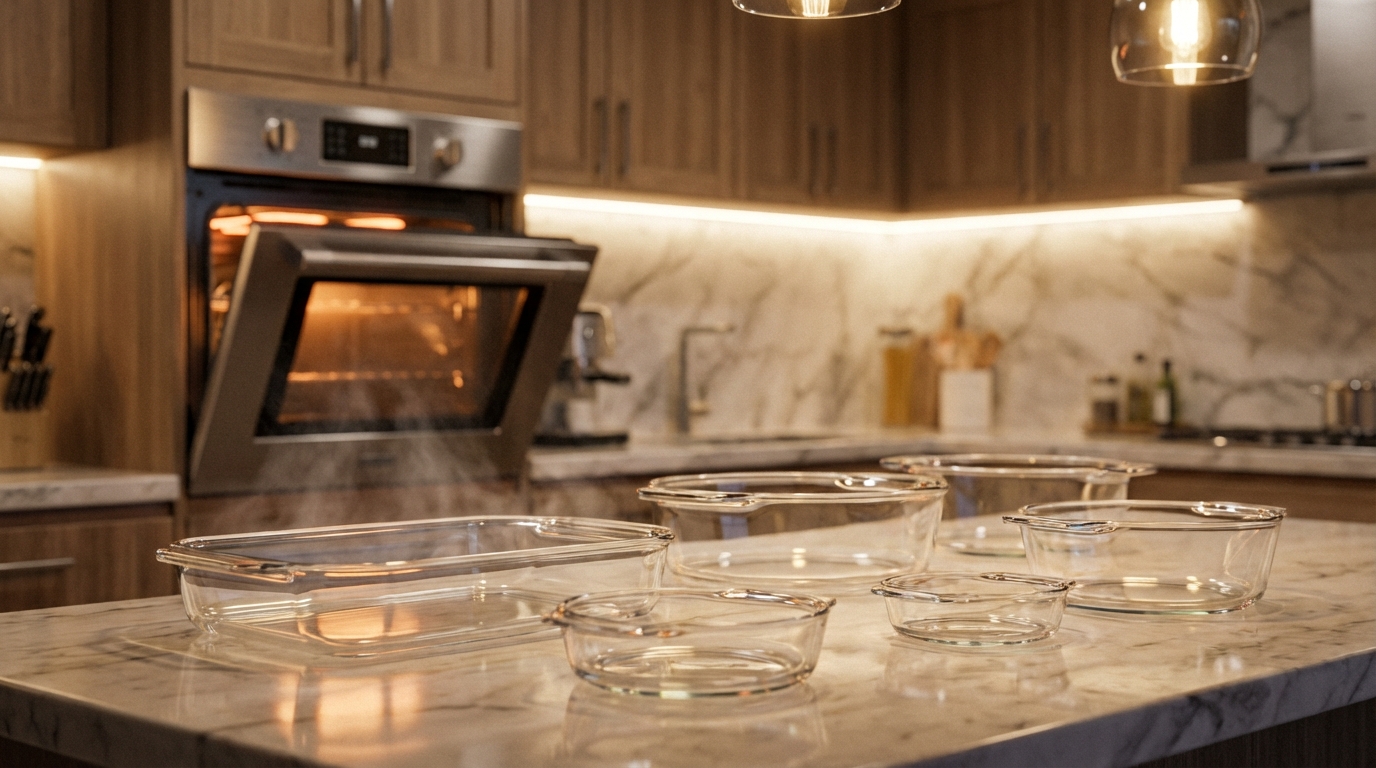
Borosilicate glass cookware offers a PFAS-free, non-toxic alternative for health-conscious kitchens, eliminating forever-chemical concerns while promising superior thermal shock resistance. The article demystifies whether these crystal-clear vessels can survive the brutal, direct heat of a broiler, detailing real-world tests that reveal safe temperature thresholds, visual cues that precede failure, and the critical manufacturing differences that separate lab-grade pieces from thinner, cheaper imports that are prone to shattering. Readers learn practical care habits--such as avoiding sudden surface wetting, pre-heating gently, and inspecting for micro-cracks--that extend the lifespan of premium borosilicate pans and baking dishes, making them heirloom items rather than disposable commodities. By comparing initial cost against replacement frequency, the piece demonstrates how investing in thick-walled, boron-rich glass delivers better oven-to-table versatility, flavor-neutral storage, and long-term savings, all while keeping synthetic coatings and metallic leaching out of food. Ultimately, the guide empowers home cooks to choose cookware that marries chemical safety with broiler-level durability, ensuring that the quest for a toxin-free kitchen does not sacrifice culinary ambition.
PFAS-Free Borosilicate Glass Safety: What It Means for Your Kitchen
Borosilicate glass gives you a naturally non-stick, PFAS-free cooking surface that won't leach chemicals or flavors into your food--even under high heat--because it's made from just silica sand and boron trioxide, nothing else.
Chemical composition and PFAS elimination
Borosilicate glass starts with just two materials: silica sand and boron trioxide. That second ingredient makes all the difference. While regular glass (the kind in your drinking glasses) can react with certain foods, borosilicate glass stays completely neutral.
This means your tomato sauce won't pick up metallic flavors, your leftover curry won't stain the dish permanently, and most importantly--nothing from the glass itself ends up in your food, even at high temperatures. [1] The material also contains no BPA, phthalates, lead, or cadmium--not because manufacturers remove them, but because none are used in its production at any stage. [1]Here's where PFAS enters the picture: it's all about coatings. Non-stick pans get their slippery surface from PTFE, which is actually a type of PFAS. A 2022 report found that 79% of non-stick pans use PTFE coatings, and when those coatings get scratched or overheated, they can release up to 2,300,000 microplastics. [2] Borosilicate glass takes a completely different approach--it doesn't need any coating at all.
The smooth, non-porous surface naturally prevents most sticking, especially when you use a bit of oil or butter. That's why borosilicate contains zero PFAS by default, not by careful marketing. [1]
Health advantages of PFAS-free cookware
Temperature limits and real‑world broiler performanceHere's what matters for your kitchen: borosilicate glass can handle up to 400 degreesC (752 degreesF) for short bursts and 200-230 degreesC (392-446 degreesF) for continuous use. [6] But check your specific dish--manufacturer ratings range from 350 degreesF to 500 degreesF depending on the glass grade. [8] The key is borosilicate's low thermal expansion.
While regular glass cracks at 302-392 degreesF and tempered glass fails around 482 degreesF, borosilicate keeps its shape through higher temperatures. [6][8] This makes it more reliable than most glass cookware, though it's worth noting that quality
Debunking shatter myths and safe usage guidelines
Let's clear this up: those dramatic shatter stories are about tempered glass, not borosilicate. Most US "Pyrex" switched to tempered glass years ago--that's the type that explodes into tiny cubes when stressed. [9] Borosilicate behaves differently. If it breaks, you'll get a few large pieces, not a dangerous spray. [9] The safety data backs this up.
From 2011 to May 2020, the CPSC recorded just 950 ER incidents from all glass bakeware nationwide--under 10 per month. Most happened when people ignored manufacturer warnings, like broiling glass that wasn't rated for it. [9] What actually breaks borosilicate? Uneven heat.
When one spot gets much hotter than another, the stress can cause failure--especially if the glass has existing scratches or chips. [9] Your safety checklist: - Inspect glass for chips or cracks before each use - Never place hot glass on cold or wet surfaces - Skip the broiler unless your dish is specifically rated for it - Avoid direct stovetop heat--glass needs even, ambient heat [10] For high-heat cooking with fewer restrictions, cookware designed for extreme temperatures offers more flexibility. But when used properly, borosilicate glass remains one of the safest options in your kitchen.
Everyday Care Practices to Keep Your Glass Safe
Treat your borosilicate glass like a trusted friend--cool it before washing, dry it before storing, inspect it before using, and it'll reward you with years of flawless performance.
Cleaning, handling, and temperature transitions
Borosilicate glass practically cleans itself--well, almost. Because bacteria and food can't penetrate the surface, all you need is mild dish soap and a soft sponge to get it spotless. [11] Skip the steel wool and abrasive pads though. Those scratches you can't see? They're weak points waiting to crack under heat. [12] Here's the real trick: timing matters more than technique.
That satisfying sizzle when cold water hits a hot pan? It's the sound of glass crying for help. Let your bakeware cool to room temperature before washing--grab a coffee, check your email, give it 20 minutes. [12] The same patience pays off before cooking: always slide glass into a preheated oven. Starting cold glass in a cold oven might seem logical, but the uneven heating as your oven warms up creates stress across the glass. [12] One last step most people miss: dry your glassware completely before storing.
Those innocent water droplets can cause thermal shock if you heat the dish again too soon. A quick towel dry takes seconds and adds years to your glass. [11]
Storage tips that prevent stress cracks
Storage is where good glass goes bad--slowly, invisibly, until one day it doesn't survive the oven. Those tiny scratches and micro-cracks you can't see act like fault lines, and heat finds them every time. [13] Make inspection a habit: before each use, hold your glass up to the light and look along the rim and base. See a hairline crack or chip?
That piece just became your new fruit bowl--keep it out of the oven. [14] Your metal spatulas and spoons are secret saboteurs too. Every scrape they leave weakens the glass, making it more vulnerable to temperature changes. Stick with silicone or wooden utensils to keep your glass strong. [14] Smart storage prevents most damage.
Never set hot glass directly on cold granite counters--use a dry towel as a buffer. [14] When stacking pieces, slip a paper towel between them. It takes two seconds and prevents the rim dings that turn good glass into broken glass. Think of it as cheap insurance for your kitchen essentials. [12]
Value Over Time: Quality Borosilicate vs. Cheap Alternatives
One set of borosilicate bakeware can outlast three or four rounds of cheap replacements, saving you money and keeping roughly ten disposable dishes out of landfills while your food still cooks evenly and looks crystal-clear year after year.
Cost savings and durability payoff
Yes, quality borosilicate glass costs more than basic alternatives--we won't pretend otherwise. But here's where the story gets interesting: when you factor in how often you'll need to replace cheaper glass, the math completely flips.
Borosilicate's harder surface naturally resists those tiny scratches that accumulate over time (the same ones we discussed in the care section that can lead to thermal failure). [15] Plus, it won't develop that cloudy, etched look from dishwasher cycles or acidic tomato sauces--your bakeware performs just as well years down the line. [16] Commercial kitchens see the payoff within 18 to 24 months through reduced replacement costs and fewer mid-service failures. Bulk purchasing can knock 15 to 25% off the per-piece cost, making the investment even smarter at scale. [17] For home cooks?
One quality set often outlasts three or four rounds of budget alternatives. When you divide that initial cost by years of reliable use, the per-meal price becomes surprisingly reasonable--especially compared to constantly replacing cracked dishes. [16]
Environmental impact of lasting PFAS‑free products
The environmental story goes beyond your kitchen. As we covered earlier, PFAS contamination is a serious issue--and non-stick cookware contributes at every stage, from factory to landfill. [18] These "forever chemicals" persist indefinitely once released, which explains why over 172 million Americans now have PFAS in their drinking water. [19] Non-stick pans are essentially designed to fail. Their coatings degrade predictably within a few years, sending pan after pan to landfills on a regular schedule. [19] Borosilicate glass breaks this cycle entirely.
With no coating to wear out and a surface that maintains its integrity decade after decade, one purchase can eliminate multiple generations of disposable cookware. Think of it this way: every dish that lasts 20 years prevents roughly 10 cheaper alternatives from entering the waste stream. When you're ready to upgrade your cookware, choosing durability makes sense for both your wallet and the planet.
Quality pieces like our stainless steel pan follow this same philosophy--built to perform reliably for years, not seasons. [18]
- Borosilicate glass contains zero PFAS, eliminating chemical leaching risks.
- Broiler-level heat can shatter borosilicate glass; avoid direct flame contact.
- Sudden temperature swings cause thermal shock; preheat dishes with oven.
- Quality borosilicate resists scratches and clouding, outlasting cheaper soda-lime glass.
- Inspect for chips before each use; discard damaged pieces immediately to prevent breakage.
- https://slyprc.com/what-is-borosilicate-glass-made-of-why-safer-food-contact/
- https://www.safecoze.com/blog/switch-to-non-toxic-borosilicate-cookware/
- https://www.sfenvironment.org/should-i-be-concerned-about-using-non-stick-cookware
- https://www.nrdc.org/stories/forever-chemicals-called-pfas-show-your-food-clothes-and-home
- https://www.consumerreports.org/toxic-chemicals-substances/you-cant-always-trust-claims-on-non-toxic-cookware-a4849321487/
- https://slyprc.com/what-is-high-borosilicate-glass/
- https://www.glasafe.com/blogs/glasafe-blogs/what-is-borosilicate-glass-answering-16-common-faqs?srsltid=AfmBOoqqiRwojwYTvARFNaq3RSKo0UYMM7gmd2KMNTznXF2969ztJdHR
- https://kitchentoolz.com/blogs/kitchentoolz-news/is-borosilicate-glass-safe-for-baking?srsltid=AfmBOorHoro5sCc565BpmZDbdsk8s-Pi2BtfR1h5y__aY_o2k-soCJ4D
- https://www.nytimes.com/wirecutter/blog/tempered-vs-borosilicate-glass/
- https://blogs.extension.iastate.edu/answerline/2019/03/04/glass-kitchenware-cautions/
- https://www.simsonchemtech.com/blog-details/10-incredible-benefits-of-borosilicate-glass-the-durable-heat-resistant-material?srsltid=AfmBOoqgh4FxqvrfrO6JGImHyWW91hHIuvk3056GDHqSm15bIPiIogwn
- https://www.safecoze.com/blog/thermal-shock-resistance-borosilicate-glass-wont-crack/
- https://www.aegg.co.uk/blog/thermal-shock-an-explanation-of-why-glass-breakage-occurs-and-how-to-prevent-it
- https://nwedible.com/help-why-do-my-canning-jars-keep-breaking-reader-question/
- https://slyprc.com/soda-lime-vs-borosilicate-glass-guide/
- https://myborosil.com/blogs/tips-tricks/invest-in-quality-the-cost-effective-advantages-of-borosilicate-glassware?srsltid=AfmBOoptB0JHhT491zLnaNT_T6eU7mCV16plOvAf5DejDGrUGD1QY1dS
- https://www.chilinglass.com/knowledge/borosilicate-glass-vs-regular-glass-which-is-better-for-your-kitchen
- https://www.ecocenter.org/our-work/healthy-stuff-lab/reports/whats-cooking/undisclosed-pfas-coatings-common
- https://zerowastechef.substack.com/p/simple-alternatives-to-non-stick